
By Prarthana Hazarika
Shillong, June 30: An all-Indian squad. An average age of just 23. A historic second-place finish. The league’s meanest defence. The second-highest goals scored.
For many clubs, such a season would be considered an overachievement. For Birendra Thapa, it is evidence that patience, trust in youth and a clear football philosophy can compete with bigger budgets and more experienced squads.
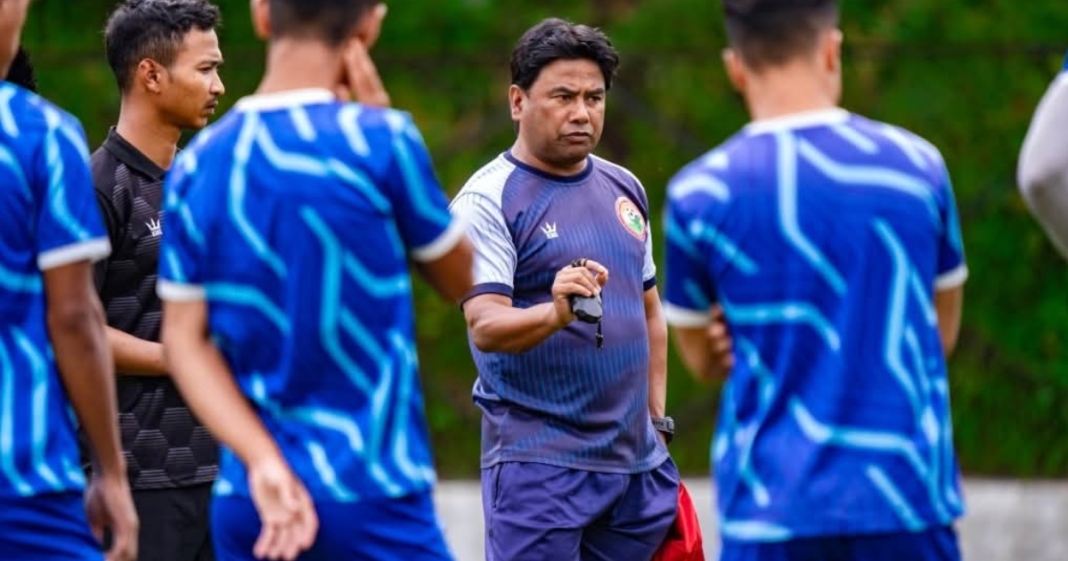
Under Thapa’s guidance, Shillong Lajong FC produced one of the finest campaigns in its history, finishing runners-up for the first time while fielding an entirely Indian squad. It was a season defined not just by results but by identity.
The numbers tell part of the story. Lajong scored 28 goals—the second-highest tally in the league—while conceding only 12, the fewest by any team. They recorded six clean sheets, the highest in the competition, completed the campaign without receiving a single direct red card and saw Phrangki Buam finish with eight goals to become the league’s Most Valuable Player. Everbright Sana added seven more as Lajong finished with two of India’s leading scorers.
Yet, for Thapa, those achievements are merely outcomes of a much deeper process.
“My transition from player to coach changed the way I see football,” he says. “As a player, I focused on my own performance. Coaching taught me to understand team dynamics, leadership, communication and player development. My playing career helps me understand the players, but coaching has shown me that success comes from creating an environment where everyone can grow.”
That shift in perspective has shaped every decision he has made since taking charge.
Few coaches share a bond with their club quite like Thapa’s with Shillong Lajong. Having served the club as both player and coach, he speaks less about employment and more about belonging.
“Shillong Lajong is my heart and soul,” he says. “The club has helped me throughout my playing career and now in coaching. Leading this club is both a privilege and a responsibility.”
That responsibility extends beyond league tables.
“The club has always believed in developing local talent and giving young players opportunities. My job is to build on that legacy. Success isn’t only about winning matches; it’s also about producing players who can represent the club, Meghalaya and India with pride.”
It is a philosophy reflected in the makeup of the current squad.

While many clubs rely heavily on experienced recruits, Lajong entrusted a group of young local players with the responsibility of competing against seasoned opponents. The gamble paid off.
“The biggest challenge with a young squad is balancing development with results,” Thapa explains. “Young players have talent and energy, but they need guidance, consistency and patience. My responsibility is to help them improve every day while building a winning mentality.”
The development of youngsters such as Gladdy, Damait, Tremiki and Lian stands among his proudest achievements this season. Rather than taking credit, however, Thapa insists their progress belongs to the players themselves.
“They exceeded my expectations. Their growth reflects their own hard work and commitment.”
Ask Thapa what he values most in a footballer, and technical ability isn’t the first answer.
“I can accept mistakes, but I cannot accept a lack of effort,” he says. “Discipline, humility, resilience and commitment are qualities that separate good players from great professionals. Technical skills can always improve. Character is much harder to teach.”
That emphasis on culture explains why Lajong’s football is as much about discipline as entertainment.
Thapa wants his team to dominate possession, attack with purpose and defend aggressively, but never at the expense of balance.
“People often think attractive football and winning are opposites,” he says. “They’re not. Good football is about creating chances, controlling important moments and defending with discipline. Sometimes you need flair, sometimes resilience. The best teams know when to use both.”
Modern coaching has become increasingly dependent on technology, data and sports science, and Thapa embraces those tools. But he is equally clear that numbers cannot replace human understanding.
“Data helps us optimise performance and reduce injuries, but it should support coaching, not replace it.
His views become even more forthright when the conversation turns to Indian football.
Thapa believes the country’s biggest challenge lies not in a lack of talent but in the absence of a strong developmental ecosystem.
“India needs a much stronger pathway for young players. We have to invest more in grassroots football, improve coaching standards and organise youth competitions better. Too often we focus on results instead of development, and that’s one reason issues like age fraud continue to exist.”
He also believes Indian footballers must become more ambitious by testing themselves abroad.
“The best players in the world compete in different leagues and constantly challenge themselves. More Indian players should look to gain that experience.”
Even so, Thapa remains optimistic that clubs built around youth development can succeed.
“People think you have to choose between developing young players and winning. I don’t believe that. With a clear vision, patience and the right environment, you can achieve both.”
His ambitions for Shillong Lajong reflect that belief.
Over the next five years, he wants the club to become one of Indian football’s most respected institutions—not only because of results but because of the players it continues to produce.
“My coaching philosophy is simple: develop better people, build better players and create a team that plays with courage, discipline and a relentless desire to win.”
For Thapa, coaching is about far more than formations or tactical diagrams.
“One misconception is that coaching is only about tactics. It’s really about developing people, building trust, managing personalities and creating the right culture. Leadership and communication are what build successful teams.”
If that culture endures long after his tenure ends, Thapa believes his work will have been worthwhile.
“I hope people remember that I built a team with character, courage and a clear identity. If Shillong Lajong continues to thrive because of the culture and foundation we created, that would be the greatest legacy I could ask for.”
Lajong’s remarkable season may have ended without the league title, but it has reinforced something perhaps even more significant. In an era when success is often measured by spending power and short-term results, Birendra Thapa has shown that conviction, local talent and a long-term vision can still shape a club’s future.