

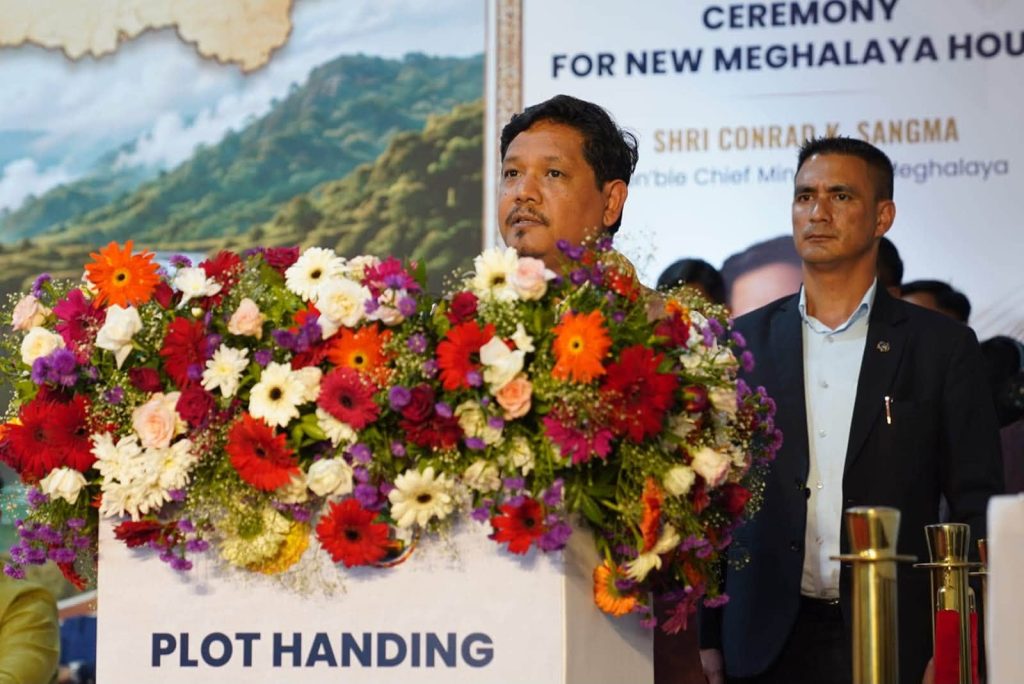
Mumbai, August 8: Meghalaya’s institutional presence in India’s financial capital took a decisive step forward today as Chief Ministers Conrad K. Sangma of Meghalaya and Devendra Fadnavis of Maharashtra jointly laid the foundation stone for a new Meghalaya House at Kharghar, Navi Mumbai.
The ceremony followed the formal transfer of land by the City and Industrial Development Corporation (CIDCO), and marks one of the most visible signs yet of Meghalaya’s growing outreach beyond the Northeast.
The existing Meghalaya House at Vashi has served the state’s citizens since 2008, but its modest 12-room capacity has long been stretched thin — especially by the steady flow of patients and attendants seeking treatment at Tata Memorial Hospital, alongside students, government officials, entrepreneurs, sportspersons and tourists passing through Mumbai.
The new Kharghar campus, spread across roughly 2,072 square metres, is designed to substantially expand that capacity, giving Meghalaya’s citizens a larger, more dependable base for medical care, education, business and travel in the city.
Both leaders framed the project as more than a real-estate milestone. Sangma called it an emotional moment for a small state contending with land constraints, remarking that the day “almost feels like a dream” for Meghalaya. He credited Maharashtra’s government, CIDCO and local officials for turning the long-standing aspiration into reality, and emphasized that the facility exists ultimately to serve the people of Meghalaya.
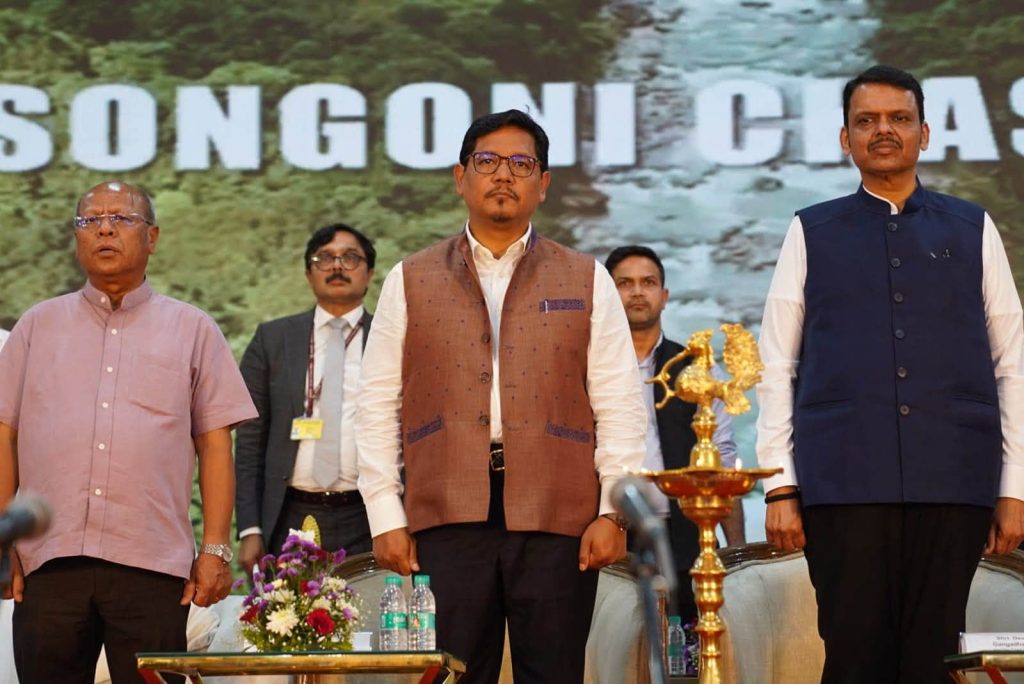
Fadnavis, in turn, highlighted the deep cultural ties between the two states, noting that Mumbai and Pune have for decades drawn students, artists and professionals from the Northeast. He described the project as reflecting India’s broader unity in diversity, and pointed to Meghalaya’s reputation — particularly in rock music — as another thread connecting the two states. He also welcomed the prospect of deeper cultural and economic collaboration as Meghalaya’s economy continues to grow under Sangma’s leadership.
Officials were quick to note that the choice of Kharghar is no accident. Cyril V. D. Diengdoh, Commissioner & Secretary of Meghalaya’s General Administration Department, pointed out that the area is fast becoming a hub for innovation, technology and data centres — positioning the new Meghalaya House to sit alongside, and benefit from, one of Maharashtra’s emerging growth corridors.
Chief Secretary Shakil P. Ahammed described the project as the product of sustained inter-state collaboration and thanked Maharashtra’s administrative machinery for its support throughout.
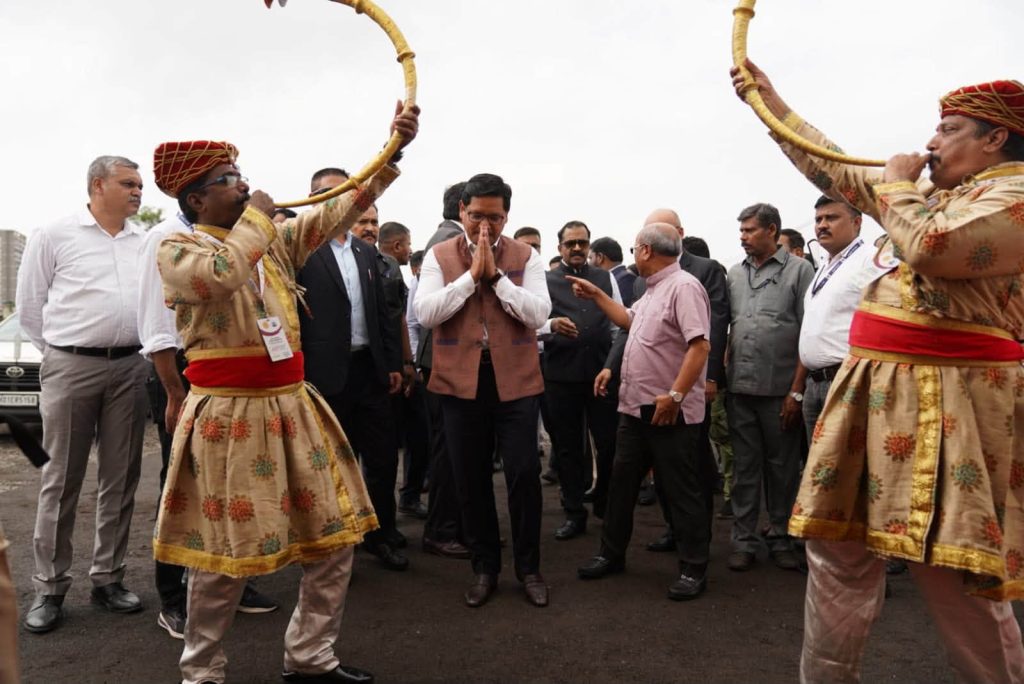
The Kharghar project fits into a broader trend of Northeastern states — and Meghalaya in particular — establishing a stronger institutional footprint in India’s major metropolitan hubs. As more citizens travel to cities like Mumbai for specialized healthcare, higher education and economic opportunity, state governments are increasingly investing in dedicated infrastructure to support them, rather than leaving citizens to navigate an unfamiliar city alone. For Meghalaya, this expansion signals a deliberate strategy: strengthening ties with states like Maharashtra not just diplomatically, but through tangible, citizen-facing infrastructure.
The event closed with a performance by the Khmih Creative Society under the Chief Minister’s Meghalaya Grassroots Music Programme, offering dignitaries from both states a glimpse of the cultural heritage the new building is meant to represent far from home.