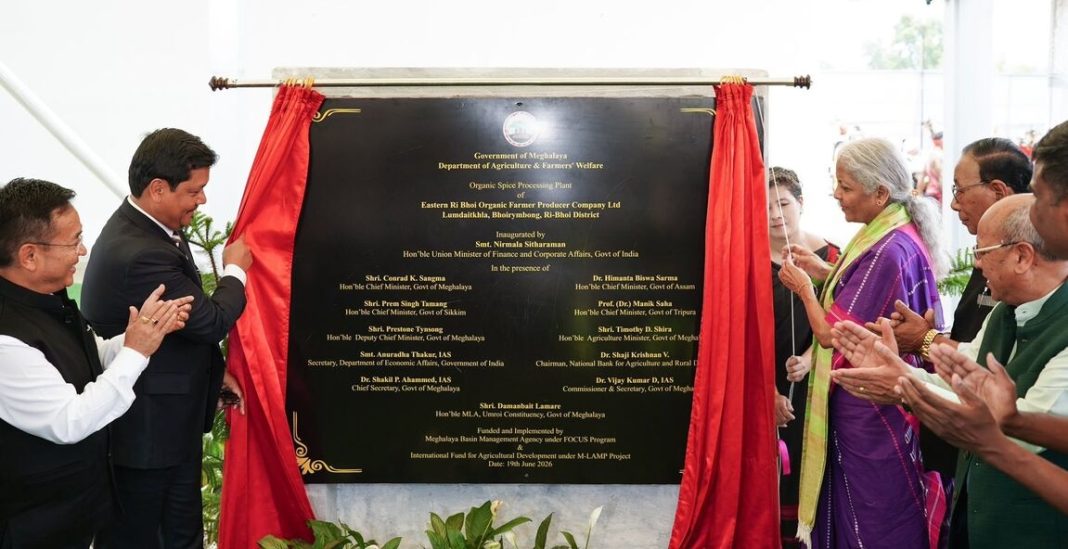

Shillong, June 19: From the turmeric-rich hills of Meghalaya to the shelves of international markets, the state took a giant leap in its organic farming ambitions on Thursday with the inauguration of Northeast India’s largest organic spice processing plant. Opened by Union Finance Minister Nirmala Sitharaman, the ₹32-crore facility is set to transform the livelihoods of over 5,500 farmers while positioning Meghalaya as a major hub for premium organic spices.
The state-of-the-art processing unit at Lumdaitkhla in Bhoirymbong, Ri Bhoi district, has been developed by the Meghalaya Basin Management Agency (MBMA) in partnership with the Eastern Ri Bhoi Organic Farmer Producer Company Ltd. The inauguration ceremony was attended by Meghalaya Chief Minister Conrad K. Sangma, Sikkim Chief Minister Prem Singh Tamang (Golay), cabinet ministers, legislators and farmers from across the region.

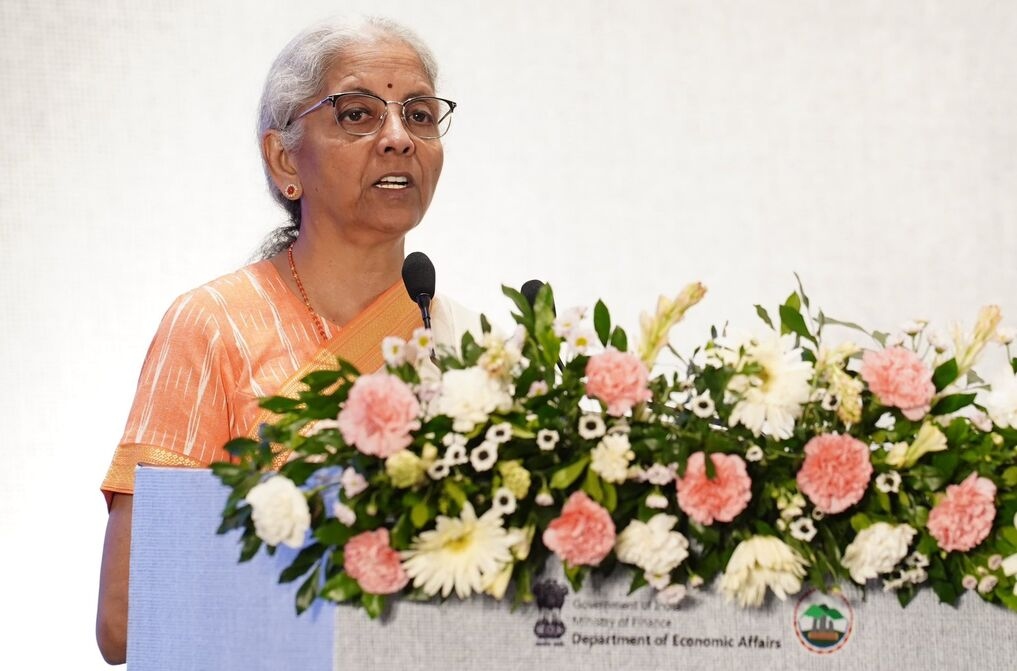
Addressing the gathering, Sitharaman lauded Meghalaya’s commitment to sustainable agriculture and community-led ecological conservation, particularly its sacred groves, which have long served as examples of environmental stewardship.
“The future of agriculture belongs to those who produce better, cleaner, safer and more sustainable products,” the Finance Minister said, stressing the growing global demand for organic and responsibly sourced produce.
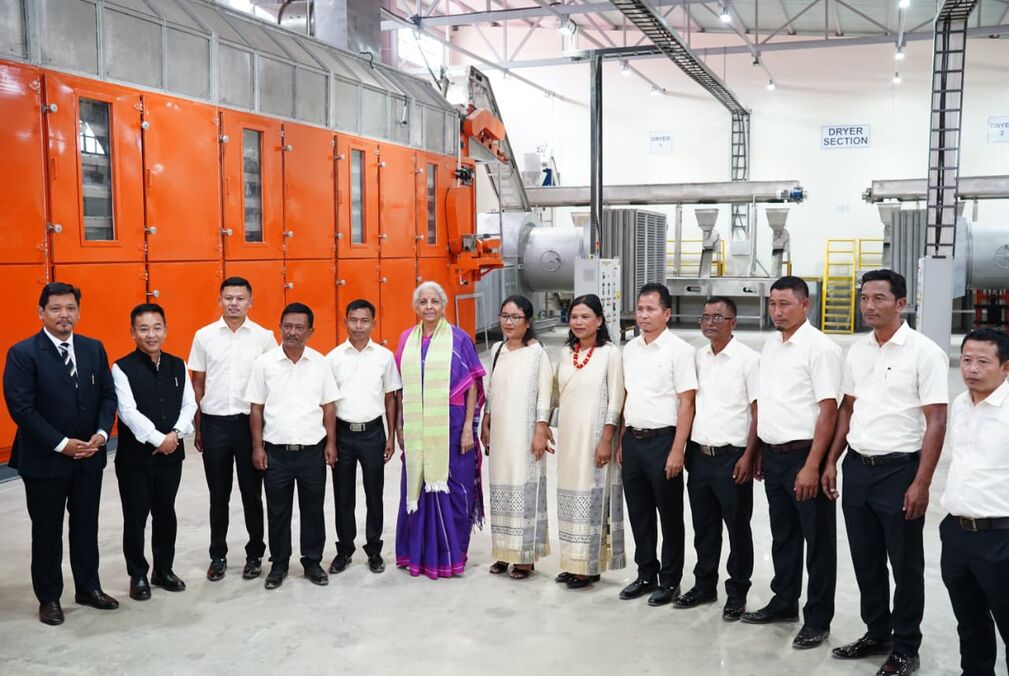
Commending the efforts of the Meghalaya government and local farmers, she described the facility as a model for agricultural value addition and rural entrepreneurship. Equipped with modern dry storage, washing, drying and pulverising facilities, the plant is expected to significantly enhance processing capacity and market access for organic growers.
“This is the first organically certified spice processing unit in the Northeast designed to process 10,000 metric tonnes of high-value organic spices annually,” Sitharaman said, adding that the project would directly benefit around 5,500 organic farmers.
Highlighting Meghalaya’s globally acclaimed Lakadong turmeric and premium-quality ginger, known for its low fibre content and high dry matter recovery, she pointed out that the global ginger market is projected to reach USD 7 billion by 2030. The Minister stressed that local value addition would allow farmers to capture a larger share of market value while strengthening links between producers, farmer organisations and consumers.
“This facility demonstrates the potential of farmers organising collectively, embracing value addition and connecting directly with markets,” she said.
Expressing confidence in the state’s organic farming ecosystem, Sitharaman said Meghalaya’s organic spice economy could become a national example of how economic growth and ecological sustainability can go hand in hand.
Chief Minister Conrad K. Sangma said the new facility is part of a broader effort to build a robust agro-processing network across the state. Over the last eight years, Meghalaya has established 11 processing units, each supporting approximately 5,000 farmers and collectively benefiting nearly 55,000 families.
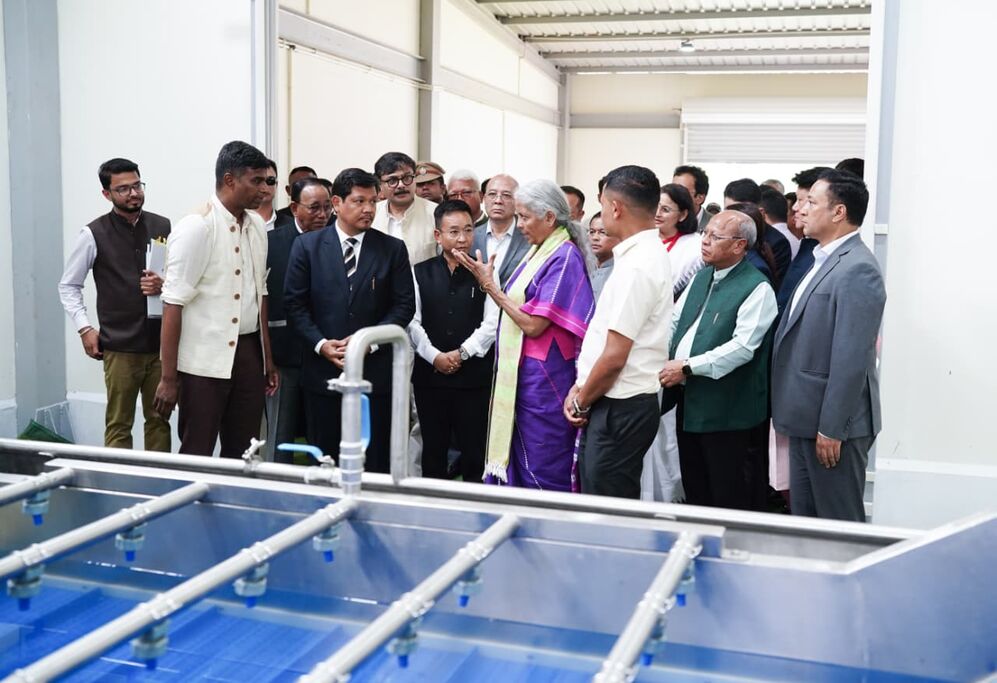
“The government has improved existing systems to make them more effective by ensuring better training, infrastructure and market access for farmers,” Sangma said.
He noted that farmer groups are selected based on their commitment and passion, qualities he described as crucial for long-term success. The Chief Minister also highlighted the growing collaboration among Northeastern states and said improved political stability in the region has enhanced the implementation of development programmes.
Sangma further underscored the role of the current political dispensation in accelerating growth and improving opportunities across the Northeast.
Built at a cost of ₹32 crore, the organic spice processing plant is expected to strengthen Meghalaya’s value-added agriculture and export-oriented organic farming sector. By enabling locally grown spices to meet international quality standards and certification requirements, the facility is expected to help farmers access premium global markets, secure higher prices for their produce and increase household incomes.
With demand for organic products rising worldwide, the project marks a significant step in Meghalaya’s efforts to transform its traditional, chemical-free farming practices into a globally competitive agricultural enterprise.