
Roopak Goswami
Shillong, Nov 3: Meghalaya’s Mawsmai Cave has yielded fresh evidence of how the Indian monsoon behaved more than 4,000 years ago, with researchers identifying a prolonged phase of weakened monsoon conditions around 4,200 years ago.
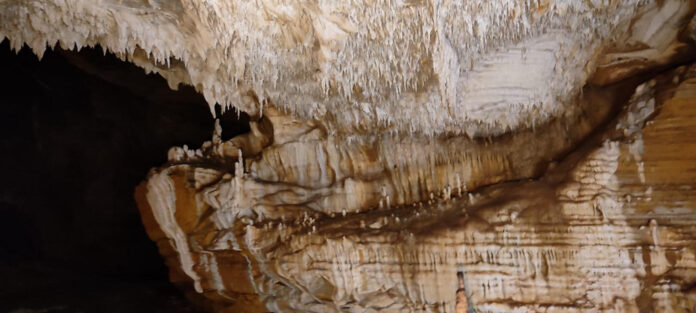
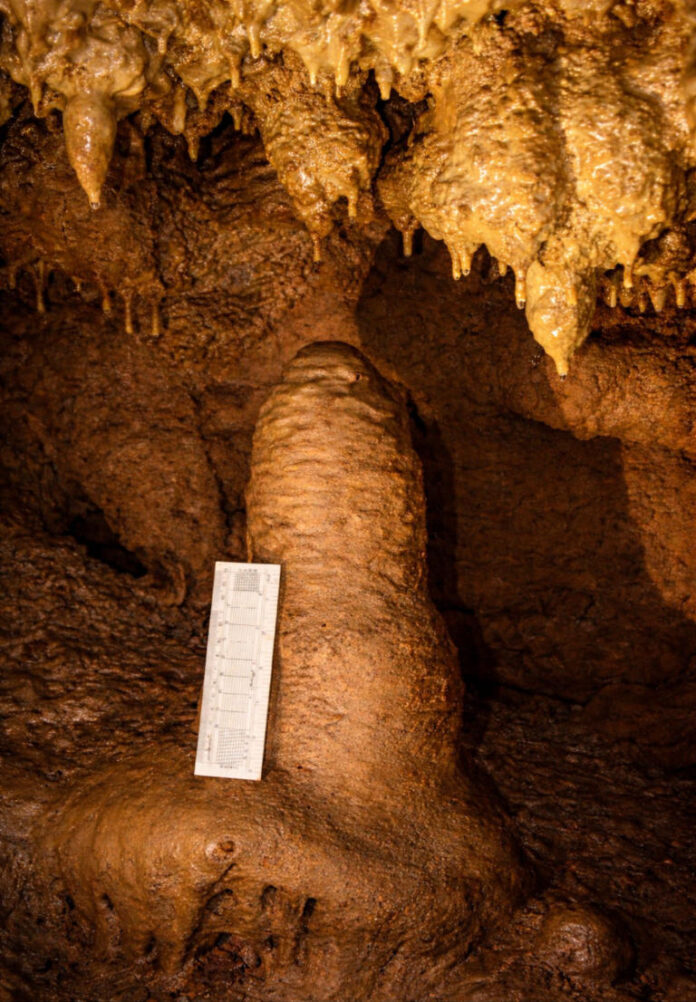
The findings come from an analysis of a stalagmite collected from Mawsmai Cave in Sohra. The mineral deposit has preserved evidence of rainfall and environmental changes dating back approximately 4,780 years.
Published in the journal Palaeogeography, Palaeoclimatology, Palaeoecology, the study reconstructs changes in the Indian Summer Monsoon between 4,780 and 3,544 years ago.
The research was conducted by Yachna Verma, Anil K. Gupta, Prasanta Sanyal, Pankaj Kumar, Priyantan Gupta, Abhijit Mukherjee and Hai Cheng.
The researchers found that monsoon conditions were relatively weak between 4,780 and 4,460 years ago before strengthening over the next 260 years.
A marked weakening followed between 4,200 and 4,000 years ago, lasting around two centuries. The monsoon then recovered moderately between 4,000 and 3,800 years ago before weakening again during the period from 3,800 to 3,544 years ago.
The findings are significant because they provide another regional record of the widely studied 4.2-kiloyear climate event, a period associated with major changes in rainfall patterns in different parts of the world.
The event has frequently been linked to weakening monsoons and drought conditions. However, the Mawsmai Cave record suggests that its impact across the Indian monsoon region was not uniform.
Comparisons with other climate records showed a pronounced regional disturbance rather than a single drought affecting the entire monsoon region.
The researchers used oxygen and carbon isotope measurements, radiocarbon dating, mineral analysis and trace-element mapping to reconstruct the past conditions.
Apart from changes in monsoon intensity, the analysis also revealed variations in soil processes and water movement within the cave.
The study points to several factors that may have influenced monsoon fluctuations during the period, including solar activity, the El Niño-Southern Oscillation (ENSO) and changes in the North Atlantic climate system.
These factors are believed to have influenced atmospheric circulation and oceanic heat transport, affecting rainfall over decades and centuries.
The research is particularly relevant to northeastern India, where monsoon rainfall is strongly influenced by moisture from the Bay of Bengal.
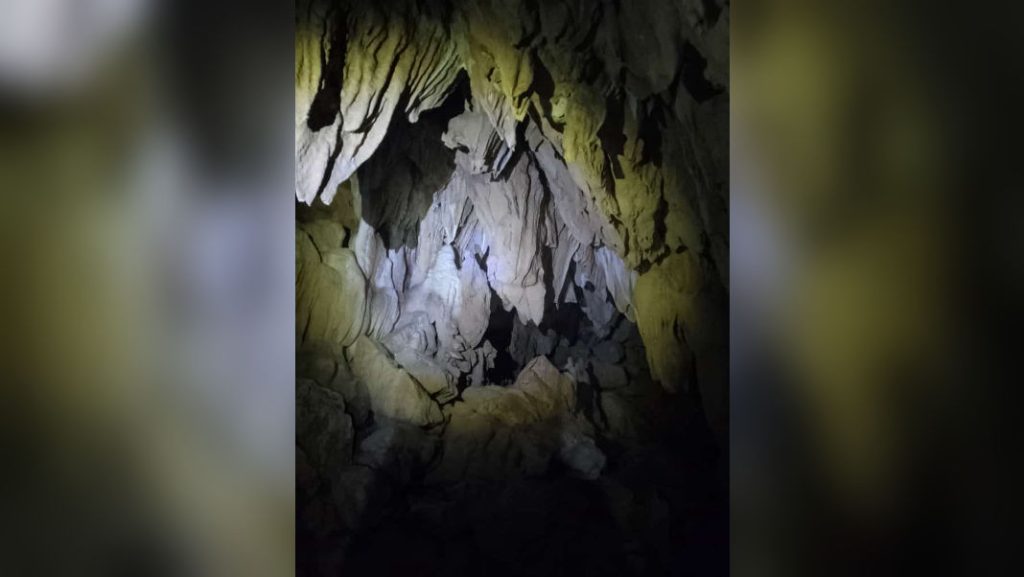
Mawsmai Cave is among the limestone cave systems of Meghalaya that preserve mineral deposits formed over thousands of years. Stalagmites develop as mineral-rich water drips from cave ceilings and gradually leaves behind layers of calcium carbonate.
The chemical composition of these layers can help scientists reconstruct past rainfall and environmental conditions, providing climate records that extend far beyond the period covered by modern weather observations.
The latest findings add to earlier paleoclimate research from Meghalaya, including studies of nearby cave systems, and provide further evidence of the changing nature of the Indian monsoon over thousands of years.