
By Satyabrat Borah
The ground beneath Assam is quietly moving, shaping the landscape in ways that are invisible to the naked eye until a sudden tremor reminds everyone of the immense forces at work beneath the soil. Situated in the far northeastern corner of India, this fertile region is known for its sprawling tea gardens, the mighty Brahmaputra River, and incredible biodiversity. Beneath this natural beauty lies one of the most geologically complex and active seismic environments on the planet. Entire settlements, ancient rivers, and modern cities sit on a massive tectonic puzzle that is under constant stress.
Understanding the possibility of earthquakes in Assam is not a matter of spreading fear, but a practical necessity for survival and sustainable living in a land shaped by geological chaos.To grasp why the earth shakes so frequently here, one must look at the larger planetary motion taking place across millions of years. The Indian subcontinent was once an isolated landmass drifting northwards across the ancient ocean. Around fifty million years ago, this colossal landmass slammed into the Eurasian plate, an ongoing collision that pushed up the massive heights of the Himalayas. That collision is far from over. The Indian plate continues to push northwards at a speed of several centimeters each year. As it drives into the stationary landmass ahead, immense pressure builds along the boundaries where these giant pieces of the crust meet.
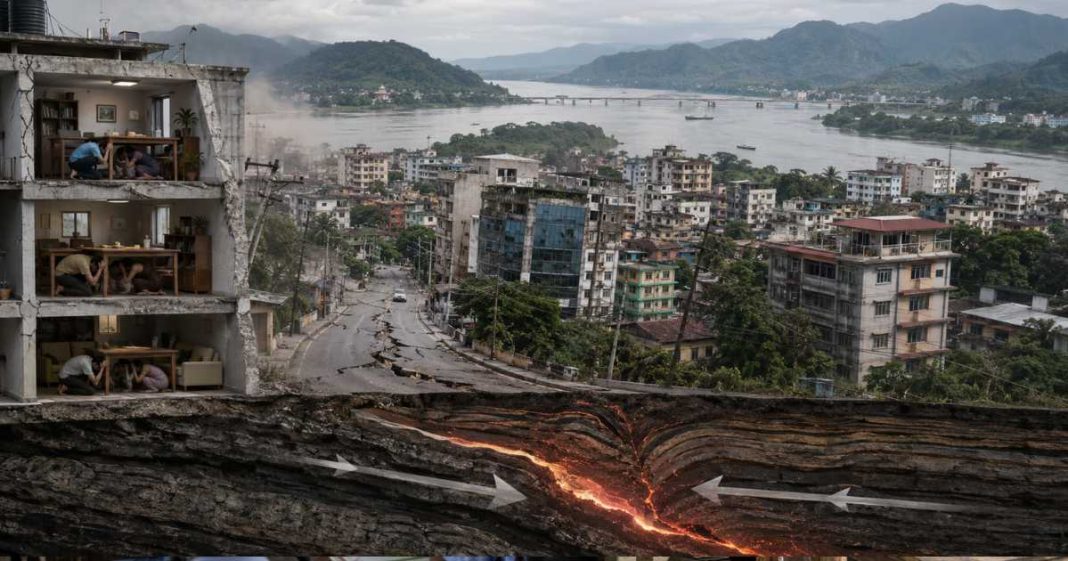
Assam finds itself squeezed in a vice between two massive geological forces. To the north, the Eastern Himalayas press downward, while to the east, the Indo-Burmese mountain range forces its own set of pressures against the region. This dual action creates a unique environment where strain accumulates continuously inside the rocks. Think of a wooden ruler being bent slowly from both ends. For a long time, the wood flexes silently, absorbing the force. Eventually, the strain exceeds the strength of the material, and it snaps violently. In geological terms, that sudden snap is an earthquake, releasing centuries of built up energy in a matter of seconds.
The geological map of Assam is crisscrossed with deep fractures known as faults. These fault lines act as weaknesses in the crust where movement is most likely to occur. Structures such as the Kopili fault, the Naga thrust, and the Himalayan frontal thrust are constant subjects of study for seismologists. The Kopili fault, running through central Assam, has proven particularly active in recent years, generating numerous moderate quakes that send tremors across neighboring states. Every time one of these faults slips, energy radiates outward in waves, rattling windows, cracking walls, and reminding residents of the restless earth below.
History provides clear testimony to the destructive power sleeping beneath the state. Two major events stand out as massive reminders of what the region can experience. In June 1897, a catastrophic earthquake estimated at a magnitude above eight struck the region. The shaking was so violent that it leveled masonry structures across Assam, altered the elevation of entire hills, and altered the flow of local rivers. Witnesses at the time described the ground moving in visible waves, making standing nearly impossible.
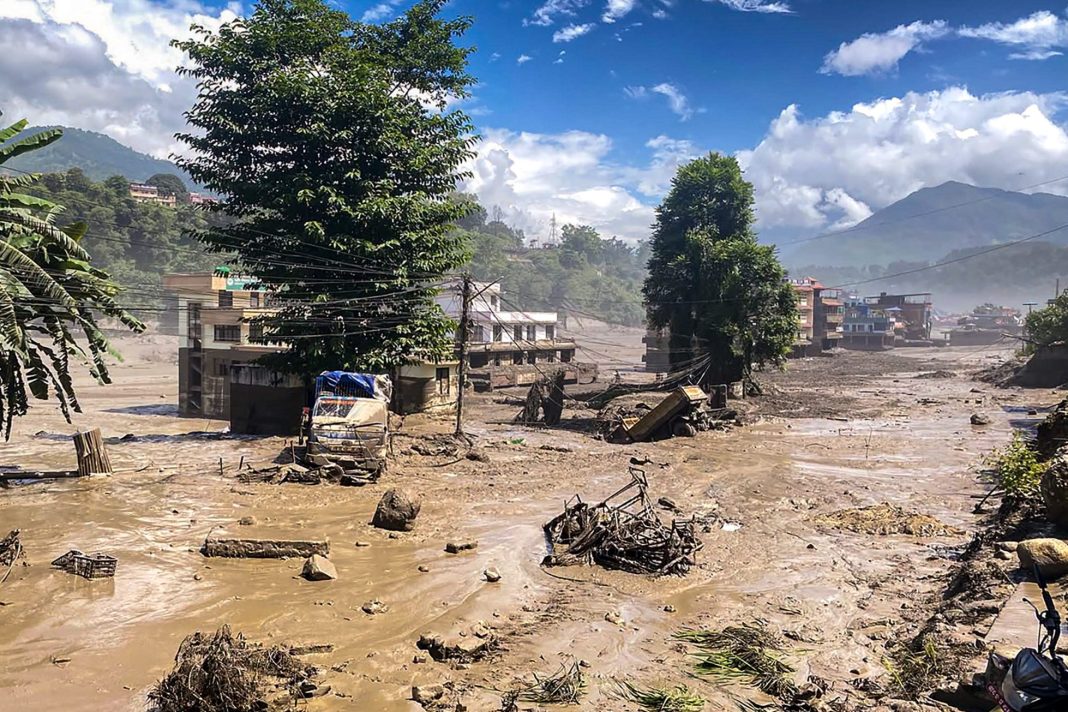
Decades later, in August 1950, another massive quake of magnitude 8.6 struck near the eastern border area. Known as the Great Assam Earthquake, it fundamentally changed the geography of the Brahmaputra valley. Mountainsides collapsed into rivers, creating temporary dams that later burst and caused devastating floods. The riverbed of the Brahmaputra rose significantly due to the sheer volume of silt and debris dumped into it, forever changing the flooding dynamics of the region. Millions of tons of earth shifted, demonstrating that an earthquake in this terrain triggers a chain reaction of environmental disasters.
Given this rich history of intense activity, official national mapping places the entire state of Assam within Seismic Zone Five. This is the highest risk classification assigned by seismologists, indicating that the area can expect ground motion of severe intensity in the future. Living in Zone Five means that minor tremors are a routine part of life. Small quakes occur almost monthly, most of them too subtle to cause damage, serving as quiet reminders that the tectonic engine is running without pause.
Scientists often talk about something called a seismic gap. This refers to a segment along an active fault line that has not experienced a major earthquake for a very long time, even though strain continues to build. Because decades have passed since the last massive rupture in 1950, large parts of the region are considered by experts to be in a state of high strain accumulation. Energy is accumulating without being released in a significant event, increasing the probability that a major quake will occur eventually.
Predicting the exact moment an earthquake will strike remains impossible. Modern science can map active fault lines, measure crustal deformation using satellites, and calculate probabilities over long timeframes, but no instrument can pinpoint a specific date or time. This uncertainty makes the situation tricky for everyday people and governments. Danger is always present, yet its precise timing remains unknown, leading to a dangerous cycle of worry followed by public indifference.
The geology of the river valley adds another layer of complexity to the potential damage. Much of Assam consists of soft, thick alluvial soil deposited over thousands of years by the Brahmaputra and its countless tributaries. Soft soil acts like a giant amplifier for seismic waves. When earthquake energy travels through hard bedrock and hits a soft basin, the shaking becomes stronger and lasts longer. Structures built on deep alluvial soil experience much harsher shaking than those built on solid rock on the nearby hills.
Soft soil combined with high groundwater levels creates a phenomenon called soil liquefaction. During intense, sustained shaking, saturated sand and silt lose their strength and behave like a liquid. Buildings resting on such soil can tilt, sink, or collapse entirely as the ground beneath them turns to sludge. Low lying areas near the riverbanks are especially vulnerable to this effect, posing a severe threat to infrastructure, roads, and residential colonies.
Modern changes in how people live and build have changed the nature of earthquake risk dramatically over the past few decades. In the past, traditional houses across the state were built using lightweight natural materials. The iconic Ikra style housing, which uses bamboo, reed, and wooden frames with light plaster, was inherently flexible. When the ground shook, these houses would flex and sway without crashing down on the occupants. If a wall did fail, the lightweight materials were far less likely to cause fatal injuries.
Rapid urbanization has swept through cities like Guwahati, Dibrugarh, Silchar, and Jorhat, transforming the skyline. Light bamboo structures have been replaced by multi storey concrete buildings packed tightly into narrow lanes. Many of these modern structures are raised without proper engineering oversight or strict adherence to earthquake resistant building codes. A popular architectural design includes an open ground floor used for vehicle parking, known as a soft storey. Without proper reinforcement, these open ground floors are vulnerable to sudden lateral collapse during strong shaking, bringing the upper floors crashing down.
Urban density creates its own severe post disaster hazards. In many older neighborhoods, narrow roads barely leave enough space for two cars to pass each other. If a major earthquake strikes during busy hours, falling debris from balconies, walls, and power lines could instantly block these narrow passages. Fire engines, ambulances, and rescue teams would find it nearly impossible to reach trapped survivors. Broken gas lines and shorted electrical networks could trigger urban fires that spread rapidly from one building to the next.
Hilly terrain presents a different set of challenges altogether. Heavy rainfall already destabilizes the steep slopes across the region during monsoon months. An earthquake occurring during or right after the rainy season can trigger massive landslides. Tons of mud, rock, and vegetation can sweep down hillsides, burying roads, severing critical transport links, and flattening homes built along the slopes. Remote communities could find themselves completely isolated from outside help for days or even weeks.
Water bodies introduce further complications. The Brahmaputra is a massive, braided river system held in check by extensive networks of embankments designed to protect villages from annual floods. Strong ground motion can crack or breach these earthen structures. If an earthquake damages embankments during the high water season, widespread flooding would immediately follow the tremors, compounding the disaster for affected communities. Landslides in upstream mountain valleys can dam rivers, creating fragile natural lakes that eventually burst and unleash devastating flash floods downstream.
Recognizing these vulnerabilities is the first step toward building genuine resilience. Since society cannot stop the tectonic plates from moving, human effort must focus on preparing for the inevitable ground shaking. Preparation operates on multiple levels, starting with government policy down to individual household choices.
Engineering and construction practices represent the single most important line of defense. Buildings do not have to fall during an earthquake if they are designed to absorb and dissipate seismic energy. Adhering strictly to national building codes for seismic zones is crucial for every new construction project, whether it is a small family home or a massive public flyover. Incorporating features like proper steel reinforcement, tied columns, and sound foundation design allows structures to sway without collapsing, giving occupants time to evacuate safely.
Retrofitted strengthening of older public infrastructure is equally vital. Hospitals, schools, emergency control centers, and bridges must remain fully operational after a disaster. Conducting systematic structural audits of key public buildings and reinforcing weaker components ensures that emergency medical services and rescue operations do not collapse right when they are needed most.
Community awareness and personal readiness play an indispensable role in saving lives. When shaking begins, panic is the greatest enemy. People who know what to do instinctively are far more likely to stay safe. Simple drills teaching the basic rule of drop, cover, and hold on under sturdy furniture can prevent severe injuries from falling plaster, light fixtures, and glass. Families benefit from discussing an evacuation plan, knowing how to turn off gas and electricity mains, and keeping a basic emergency kit stocked with water, non perishable food, flashlights, first aid supplies, and essential medicines.
Local governance and disaster response agencies have made steady progress in developing early response systems and specialized rescue teams. Regular disaster response drills help refine coordination between medical teams, firefighters, police, and community volunteers. Empowering local neighborhood networks is critical because immediate neighbors are always the first responders on the scene long before professional help can navigate damaged roads and debris.
Emergency communication networks must be built to withstand severe physical damage. Standard mobile phone networks often become congested or fail completely during major disasters due to power outages and damaged cell towers. Establishing satellite communication channels, radio networks, and backup power grids ensures that rescue commanders can map damage quickly and direct aid to the areas that need it most.
Living in a high activity seismic zone requires a shift in mindset. Earthquakes are a permanent natural feature of the land, just as much as the annual monsoons or the flowing river waters. Fear and denial do not change the underlying geology, but respect for the forces of nature leads to smart, life saving choices. Every safe building constructed, every family drill practiced, and every reinforced bridge brings the region one step closer to surviving the next major tremor.
The possibility of earthquakes in Assam is an absolute geological certainty over the long term. The deep earth will continue to shift, faults will continue to slip, and the ground will shake again as the Indian plate makes its eternal journey northward. By combining traditional wisdom with modern engineering, enforcing strict building standards, and keeping communities informed, the people of the valley can face this constant threat with strength, resilience, and confidence. Earthquakes are inevitable, but massive destruction does not have to be. Through foresight and dedicated preparation, society can build a safe future atop one of the most dynamic landscapes on earth.