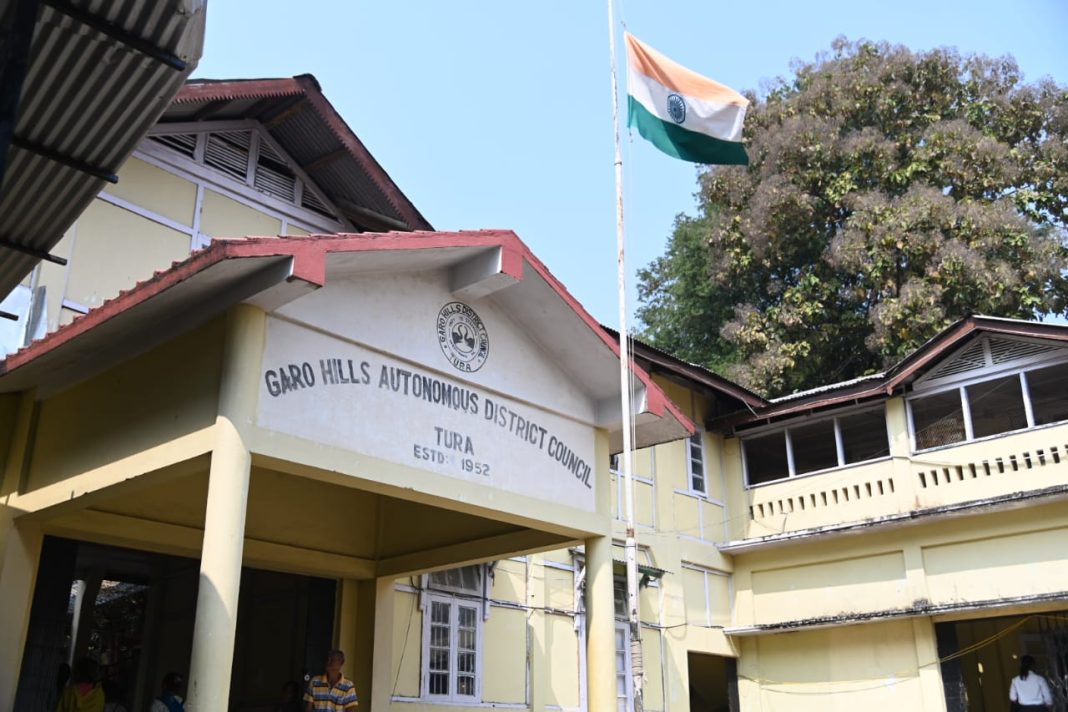

Shillong, March 8: Adding force to the opposition from Garo Hills plain belt to the order barring non-tribals from contesting the Council polls, Trinamool Congress MLA Dr Mizanur Rahman Kazi has urged Governor CH Vijayashankar to declare the Council “untra vires and invalid” in view of the order.
The MLA voiced his opposition to the February 17 notification of Garo Hills Autonomous District Council (GHADC) mandating Scheduled Tribe certificate for poll candidates, arguing that an executive order imposing such disqualification.
It is “nowhere found in the Constitution of India, the Sixth Schedule, or the Assam and Meghalaya Autonomous Districts (Constitution of District Councils) Rules, 1951,” he said in his letter to the governor.
He wrote that the notification “is ultra vires the Constitution of India, contrary to the provisions of the Sixth Schedule, and violative of fundamental rights guaranteed under Part III.”
The GHADC order requires candidates in general elections and bye‑elections to produce a valid Scheduled Tribe certificate.
Kazi countered that Paragraph 2 of the Sixth Schedule guarantees election of district council members on the basis of adult suffrage, a concept anchored in Article 326 and extended to all citizens aged 18 and above unless otherwise disqualified by law.
“Nowhere does the Constitution restrict adult suffrage or eligibility to contest elections exclusively to Scheduled Tribes,” he wrote.
He outlined four constitutional defects. First, he cited violations of Articles 14 and 15, saying the rule discriminates “against non‑tribal citizens solely on the basis of community status.”
Second, it offends Article 326 “by restricting the democratic process of elections conducted on the basis of adult suffrage.” Third, the executive committee “cannot amend or override statutory election rules or constitutional provisions through an executive resolution.”
Fourth, he warned of “erosion of the basic democratic structure, by excluding otherwise eligible citizens from participating in local self‑governance.”
Kazi emphasized that the 1951 Rules — adopted in Meghalaya — stipulate membership qualifications based on citizenship, age and voter status, not tribal certificates, even for unreserved seats.
He described the notification as tantamount to “100% reservation” imposed by executive fiat and beyond the committee’s legislative competence.
“While the protection of tribal autonomy is a cherished constitutional objective, it must operate within the framework of the Constitution and cannot be achieved by extinguishing the lawful rights of other citizens,” he wrote.