
By Satyabrat Borah
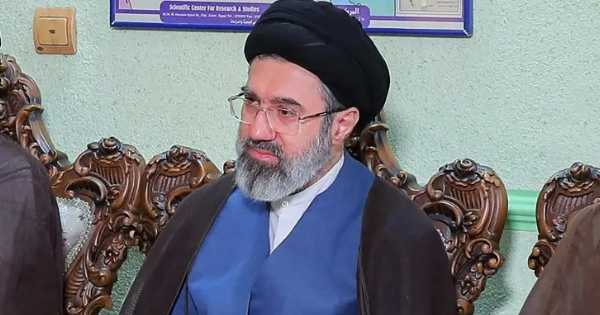
The morning sky over Sonapur carried a quiet excitement as people gathered to witness a moment many in Assam had waited for years. The inauguration of the Guwahati Science City marked more than the opening of a new building. It represented a dream taking shape, a space where curiosity, imagination, and knowledge could meet. Assam Chief Minister Himanta Biswa Sarma formally opened the facility, calling it an important step toward strengthening science education in the state and inspiring young minds to explore the world through learning and discovery.
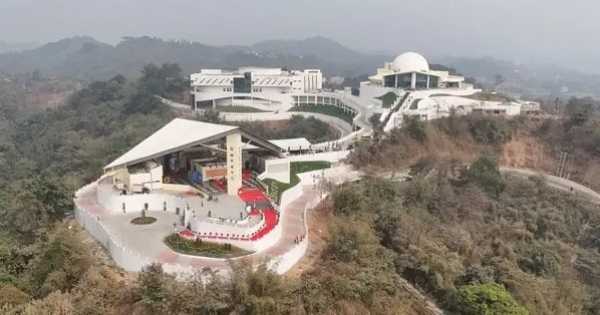
For generations, science museums and learning centres have played a special role in shaping curiosity among children and students. Many people remember their first encounter with science not through textbooks but through exhibits that could be touched, explored, and experienced. That sense of wonder is what the Guwahati Science City aims to create. Located on the outskirts of Guwahati in the Sonapur area, the campus spreads across about 250 bighas of land. The scale of the project shows the ambition behind it. The facility stands larger than the well known Science City Kolkata, which has long served as a major centre for science education in eastern India.
The project came to life through a partnership between the Government of Assam and the National Council of Science Museums, which functions under the Government of India. The council has played a major role in building science museums across the country, helping states develop spaces that combine education with engaging experiences. The Guwahati Science City reflects that philosophy. Rather than presenting science as something distant or difficult, the complex invites visitors to see science as part of everyday life.
The construction of the campus required an investment of around Rs 288.13 crore. Such a large investment shows how the state government views science education as a key area for the future. Technology shapes nearly every aspect of modern life. Students who grow up understanding scientific ideas gain an advantage when they move into higher education and careers. Facilities like the Science City help bridge the gap between classroom learning and real world understanding.
Two main sections of the complex have already been completed. These sections are named Eureka and Space Odyssey. Each of them focuses on a different aspect of scientific exploration. The Eureka section introduces visitors to the fundamental principles of science through interactive exhibits. Visitors can experiment with ideas related to physics, motion, sound, energy, and many other topics. The design encourages hands on learning. Instead of simply reading about scientific concepts, students can see how those ideas work through demonstrations and experiments.
The Space Odyssey section focuses on astronomy and space science. Interest in space has always fascinated children and adults alike. Exhibits in this section explore the solar system, planets, stars, and the technology used in space exploration. Visitors can learn how rockets travel into space, how satellites orbit the Earth, and how scientists study distant galaxies. Such experiences often spark a deep curiosity about the universe.
Walking through a science centre often feels like stepping into a world where questions lead to discovery. Children press buttons, spin wheels, watch lights flash, and see models come alive. That excitement encourages them to ask why things happen and how the world works. Teachers often say that curiosity forms the first step toward learning. When students feel inspired to ask questions, they begin a journey of understanding.
The Guwahati Science City has been designed with that idea in mind. The entire complex aims to serve as an edutainment hub. The word edutainment brings together education and entertainment. The goal is to make learning enjoyable and engaging. Visitors do not feel as if they are sitting in a classroom. They feel as if they are exploring a place filled with surprises.
During the inauguration ceremony, Himanta Biswa Sarma shared a personal memory from his childhood. As a young boy he had visited the science museum in Kolkata. That experience stayed with him for many years. The exhibits left a strong impression on his mind and made him imagine what such a facility could mean for students in Assam. The dream of building a similar centre in Guwahati remained with him for a long time. The opening of the Science City brings that dream into reality.
Personal experiences often shape the vision of leaders and policymakers. A visit to a museum or science centre can leave a lasting influence on a child. Many scientists, engineers, and innovators recall moments when curiosity first sparked their interest in science. Such places can change the way children see the world. Instead of memorising facts from textbooks, they begin to see science as an adventure of discovery.
The Science City also reflects the growing importance of science and technology in modern society. Industries depend on scientific research and innovation. Medical advancements rely on scientific understanding. Environmental challenges require scientific solutions. Students who grow up with strong scientific knowledge gain opportunities to contribute to these areas.
Education experts often stress the need for practical learning. When students see scientific ideas in action, they remember them more clearly. Experiments and demonstrations help them connect theory with real life. Science museums play a powerful role in creating that connection. Exhibits allow visitors to explore ideas through observation and experimentation.
Apart from the two main sections already completed, additional components are planned for the campus. These include a Science Innovation zone and a Science Park. The Innovation section will focus on creativity and invention. It will encourage students to think about how new ideas turn into practical solutions. Exhibits may include demonstrations of robotics, engineering models, and emerging technologies.
The Science Park will extend learning into an open outdoor space. Parks designed around science themes often include large interactive installations. Visitors may encounter giant models, mechanical displays, and experimental structures placed across the landscape. Walking through such a park feels like a journey through science in motion.
The inauguration ceremony also included another important announcement. The Chief Minister virtually opened five district science centres located across Assam. These centres have been built in Amingaon, Majuli, Silchar, Kaliabor, and Bongaigaon. Each centre brings science learning closer to communities outside the capital city.
The development of these centres required an investment of about Rs 178.13 crore. The goal is to make science education accessible to students living in different parts of the state. Travel to Guwahati may not always be easy for students from distant districts. Local science centres give them a chance to experience similar interactive learning opportunities.
Each of the district science centres includes science galleries designed to explain scientific concepts through visual displays and hands on models. A digital planetarium with sixty four seats forms another major attraction. Planetariums have always captured the imagination of visitors. Inside the dark dome, projections of stars and galaxies create a feeling of travelling through space. Children often sit in silence while watching the simulated night sky unfold above them.
An auditorium also forms part of each centre. Such spaces can host lectures, workshops, film screenings, and educational programmes. Teachers and scientists may use these facilities to conduct demonstrations or discussions. Students may attend science shows that explain complex ideas in simple language.
The creation of these centres shows a long term commitment toward nurturing scientific awareness across Assam. A network of science centres helps spread curiosity and learning across different regions. Students who visit these places may discover interests that guide their future careers.
Science education has grown rapidly across India during recent decades. Institutions and research centres have expanded across the country. Technology industries continue to grow. Young people entering these fields require strong foundations in mathematics, physics, chemistry, biology, and engineering.
Spaces like the Guwahati Science City support that foundation by making science visible and accessible. Students who visit such places often return with stories of experiments they saw and ideas they explored. Teachers can connect classroom lessons with experiences from the museum. Parents who accompany their children also rediscover scientific ideas they once studied.
Another important aspect of science centres involves public engagement with science. Scientific thinking encourages people to question, analyse, and understand evidence. Societies benefit when citizens appreciate scientific knowledge. Understanding scientific principles helps people make informed decisions about health, technology, and the environment.
Museums and science centres act as bridges between scientists and the public. Exhibits translate complex research into understandable forms. Visitors gain insights into how scientific discoveries shape daily life. Such understanding encourages respect for research and innovation.
The Guwahati Science City may also become a major attraction for tourists visiting Assam. Educational tourism has gained popularity in many parts of the world. Families travelling with children often include museums and science centres in their plans. Visitors from neighbouring states may travel to Guwahati to explore the new facility.
The location of the campus near Sonapur places it within reach of the city while providing enough space for a large complex. Wide grounds and open areas create a pleasant environment for visitors. School groups arriving on educational trips can spend several hours exploring the different sections.
Students often remember school excursions to museums and science parks with great excitement. Walking through exhibits with classmates creates a shared sense of discovery. Teachers guide discussions while students explore displays. Such experiences often stay in memory for many years.
For Assam, the Science City also represents a symbol of progress and aspiration. The state has made efforts to strengthen its education infrastructure. Universities, research institutes, and technological centres have expanded. The Science City adds another dimension to that effort by promoting curiosity among younger students.
Curiosity stands at the beginning of every scientific journey. Children naturally ask questions about the world around them. Why does the sky change colour at sunset. How do airplanes stay in the air. What causes thunder during storms. When such questions meet thoughtful explanations, learning begins.
Science centres encourage children to keep asking questions. Exhibits provide answers while inviting new questions. A visitor might watch a demonstration about electricity and begin wondering about how power reaches homes. Another visitor might explore the solar system and start imagining what life might look like on distant planets.
Teachers often emphasise that science is not simply a collection of facts. Science represents a way of thinking. It involves observation, reasoning, and experimentation. Science museums help convey that spirit of exploration.
The opening of the Guwahati Science City may inspire future generations of scientists, engineers, doctors, and innovators from Assam. Some children visiting the complex today may become researchers tomorrow. They may remember the excitement they felt while exploring interactive exhibits.
Leaders and educators hope that such facilities help build confidence among students. When young people see that their own state hosts advanced educational spaces, they feel encouraged to dream big. Opportunities no longer appear distant. Knowledge becomes accessible within their own communities.
The Science City also stands as a reminder of how collaboration between institutions can produce meaningful results. The partnership between the Assam government and the National Council of Science Museums shows how national expertise and regional vision can work together.
The coming years will reveal how the facility grows and evolves. New exhibits may appear as technology advances. Special programmes may invite scientists and educators to interact with students. Science festivals, workshops, and competitions may bring together young innovators from different districts.
What began as an idea inspired by a childhood visit has now become a landmark of learning in Guwahati. The large campus at Sonapur invites visitors to explore science through curiosity and imagination. Families, teachers, and students will walk through its halls discovering ideas that shape the modern world.
When children step into the interactive galleries, press buttons on experimental displays, watch stars appear inside the planetarium dome and ask questions about the universe, the purpose of the Science City becomes clear. Knowledge grows when curiosity finds a place to explore. The Guwahati Science City offers such a place, opening doors to discovery for countless young minds across Assam.