
By Dipak Kurmi
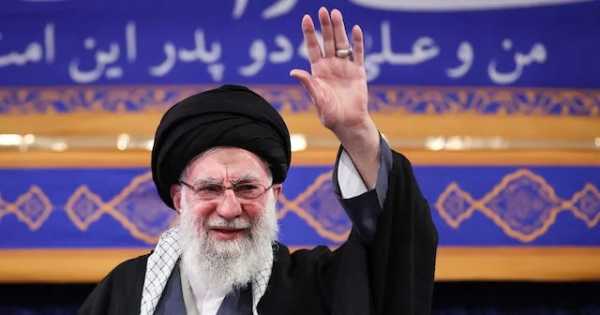
The contemporary global landscape is hurtling toward a geopolitical abyss, precipitated by what many observers characterize as a reckless and deeply misguided experiment in state-level decapitation and coercion. The onset of open warfare against Iran was not a sudden anomaly but a foreseen consequence of a long-standing escalatory arc. The assassination of the 87-year-old Supreme Leader, Ayatollah Ali Khamenei, orchestrated through the combined machinations of United States and Israeli forces, has been framed by proponents as a surgical strike against tyranny. However, in the cold light of historical reality, this act appears to be merely the latest episode in a strategic playbook as old as the Iran-Iraq War, now dressed in the sophisticated garb of 21st-century technology and executive hubris. This decapitation project is neither novel nor subtle; it represents a continuation of a century of covert interventions, ranging from the CIA’s orchestration of the 1953 coup against Mohammad Mossadegh to the complex entanglements of the Iran-Contra affair.
To truly grasp the gravity of the current conflagration, one must acknowledge that the Iranian state and its people have endured far more grueling trials in the past. During the eight years of the “Holy Defence” against Iraq in the 1980s, millions of citizens poured into the streets, fueled by national resolve rather than technological sophistication, marching for survival against a far better-equipped adversary. Today, those same streets are alive again, but the atmosphere is heavy with a new overlay of fear, uncertainty, and unprecedented international interference. Whether the global community accepts it or not, the traditional global order has effectively dissolved into a state of disorder veiled as governance. The current assault on Iran has followed a predictable arc of overreach, where decision-makers in Washington and Jerusalem assumed that eliminating the top tier of leadership would automatically create political pliability.
This assumption fundamentally underestimates the robustness of the Islamic Republic’s institutional architecture. The Iranian system is built upon a sophisticated framework of overlapping authorities, including the Office of the Supreme Leader, the Islamic Revolutionary Guard Corps (IRGC), and parallel clerical networks, all designed specifically to withstand disorientation and leadership loss. The very internal fissures that external powers seek to exploit—such as ethnic diversity and border minorities—are now being leveraged by Tehran to consolidate national loyalty rather than fracture the state. The shadow of the Iran-Iraq War looms large here; that conflict demonstrated that foreign interference, whether through Saddam Hussein’s aggression or Western intelligence, tends to stiffen rather than weaken national resolve. The ghosts of that era are being summoned once more in the minds of military planners who understand that Iranians fight most effectively when they perceive an existential threat.
The strategy of arming Kurdish groups and various militias, a clandestine pursuit of the CIA since the 1980s, may succeed in setting co-ethnics against one another, yet it is unlikely to deliver the long-term control envisioned by external manipulators. While “Uncle Sam” may cheer from a distance, the reality on the ground remains volatile and unpredictable. Furthermore, the stage of proxy conflict extends far beyond Iran’s borders, with the state having long been accused of facilitating groups such as Hamas in Palestine, Hezbollah in Lebanon, and the Houthis in Yemen. By targeting Khamenei, the U.S. and Israel have paradoxically elevated him to the status of a martyred leader remembered for defending his nation, rather than a figurehead vulnerable to internal protests. In their opening salvos, Israel and the United States have reportedly dropped more than 5,000 bombs, striking both military and civilian infrastructure, creating a humanitarian toll that fuels the narrative of a nation under siege.
Iran has long been a theater for intensive infiltration and information warfare, involving everything from high-level informants to the manipulation of CCTV networks and communication infrastructure. However, the decapitation strategy ignores a fundamental lesson of asymmetric warfare: the removal of individuals does not dismantle deeply institutionalized systems. Even the invocation of the Iranian diaspora, numbering in the millions, has been used as a tool for legitimacy by Western actors. Figures like Reza Pahlavi, the exiled son of the last Shah, have emerged as symbolic figureheads in opposition narratives abroad, yet his support remains fragmented and viewed with skepticism by those who fear foreign manipulation. Meanwhile, European powers like France, Germany, and the U.K. find themselves marginalized, caught between economic ties and domestic inertia, even as their own assets are reportedly targeted by Iranian drone capabilities.
The conspicuous silence of the BRICS nations, where Iran holds membership, highlights the limited influence of traditional alliances in a conflict defined by technological overmatch. Yet, Iran’s greatest deterrent remains its geostrategy. The partial closure of the Strait of Hormuz, through which approximately 20 per cent of global oil exports pass, demonstrates the enduring power of geography. These disruptions ripple across global markets and supply chains, directly challenging the credibility of American global hegemony. While Iran faces severe internal pressures including poverty, unemployment, and factionalism exacerbated by sanctions, the current external pressure is more likely to consolidate competing factions into a unified front for survival. Tehran now faces the task of reshaping its governance while pursuing strategic negotiations, not as an act of capitulation, but as a means of maintaining agency in global affairs.
A glaring double standard continues to underpin this interventionist logic. Israel reportedly maintains approximately ninety undeclared nuclear warheads with zero international scrutiny, while Iran’s limited and largely defensive nuclear capability is cast as a global threat. This imbalance reinforces the narrative that power exercised by the strong is viewed as legitimacy, whereas defensive capacity in the hands of the perceived weak is labeled as aggression. The war on Iran is a manifestation of a broader pathology of intervention that relies on manipulation and coercion while remaining divorced from the realities of institutional resilience. If Tehran is being turned into the next Gaza, it is not due to inherent weakness, but because the architects of chaos have underestimated the forces of popular mobilization. Ultimately, the attempt to dismantle the Iranian state may yet consolidate it, transforming a campaign of decapitation into a story of renewed strategic agency, leaving the world to wonder if this is truly what has been gained in the name of the “guardians of democracy.”
(the writer can be reached at dipakkurmiglpltd@gmail.com)