
By Dipak Kurmi
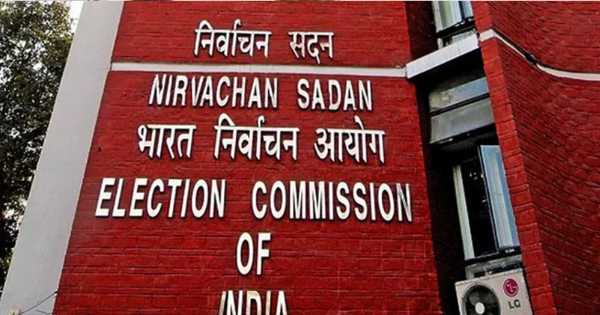
The announcement by the Election Commission of India (ECI) regarding the upcoming legislative assembly elections has finally quelled months of feverish speculation, setting the stage for a high-stakes political drama across four states and one Union Territory. With the tenures of the current assemblies in West Bengal, Keralam, Tamil Nadu, Assam, and Puducherry drawing to a close in May and June, the democratic machinery has pivoted into overdrive. According to the official schedule, voters in Kerala, Assam, and Puducherry will exercise their franchise in a single phase on April 9, while Tamil Nadu will follow suit with its own single-phase polling on April 23. West Bengal, historically the most volatile of the lot, will see a staggered two-phase election on April 23 and April 29. The culmination of this massive exercise in popular sovereignty will be the counting of votes across all five regions on May 4, a day that promises to redefine the regional and national political landscape.
This electoral cycle unfolds against a backdrop of intense institutional scrutiny and political acrimony. The Opposition parties have been vocal in their skepticism, leveling serious accusations against the Chief Election Commissioner and the ECI for allegedly acting in collusion with the ruling Bharatiya Janata Party (BJP). These allegations gained significant traction during the Special Intensive Revision (SIR) of electoral rolls, a process that critics argue was manipulated to favor the saffron party at the Centre. Despite these ripples of discontent and the administrative challenges of overseeing such a geographically diverse set of polls, the ECI appears confident in its ability to maintain order. While the Commission anticipates a relatively smooth process in most regions, West Bengal remains a significant outlier where political tensions are perpetually at a boiling point, largely due to the confrontational stance of the Trinamool Congress (TMC) and its firebrand leader, Mamata Banerjee.
In the eastern frontier of Assam, the political stakes are arguably at their highest as the state grapples with complex issues of identity, development, and incumbency. The Congress party, now under the stewardship of the young and energetic Gaurav Gogoi, son of the late former Chief Minister Tarun Gogoi, is making a concerted effort to reclaim its lost bastion. On the opposing side, Chief Minister Himanta Biswa Sarma of the BJP maintains a posture of supreme confidence, dismissing the challenge as a non-contest and asserting that his party occupies an unassailable position. The government intends to leverage its record of infrastructure development, citing the expansion of road networks, modernized railway systems, new airports, and the high-profile Tata semiconductor plant as evidence of a prosperous future. However, political observers remain cautious, noting that the recent restructuring of assembly segments and a palpable anti-incumbency factor could create unpredictable shifts in the electorate’s behavior.
The narrative in Assam is further complicated by deep-seated social anxieties and the grievances of specific demographics. While the BJP counts on the loyalty of its vast network of beneficiaries who have gained from various welfare schemes, the Opposition is focusing its critique on the perceived alienation of tribal communities and the Muslim population. These groups have expressed feelings of being targeted and marginalized by recent policy shifts and administrative maneuvers. This dichotomy between the promise of industrial modernization and the reality of social fragmentation makes the Assam outcome particularly difficult to forecast. Even seasoned political soothsayers are hesitant to offer absolute predictions, as the tug-of-war between the government’s development narrative and the Opposition’s focus on identity politics continues to intensify in the lead-up to April 9.
In the southern peninsula, the political dynamics present a study in contrasts between Kerala and Tamil Nadu. In Kerala, the incumbent Left Front is navigating the treacherous waters of anti-incumbency while simultaneously fending off challenges from both the Congress-led United Democratic Front and an increasingly assertive BJP. The state’s unique political culture, which historically alternates between the two major fronts, puts the Left in a defensive position as it seeks to break this historical cycle. Conversely, in Tamil Nadu, the Dravida Munnetra Kazhagam (DMK) appears to be on much firmer ground. Unlike its counterparts in other states, the DMK does not seem to be facing significant domestic headwinds on its home turf, positioning it as a formidable force against its rivals in the single-phase vote on April 23. This regional stability stands as a testament to the enduring strength of Dravidian politics in the face of national political shifts.
Meanwhile, the Union Territory of Puducherry offers a distinct political flavor, where the primary issue is not just governance but the very nature of its administrative status. Currently governed by Chief Minister N Rangasamy’s All India NR Congress with the strategic support of the National Democratic Alliance (NDA), the territory is largely unified on one front: the demand for full Statehood. Unlike the fierce ideological battles seen in the neighboring states, the contest in Puducherry is characterized by a rare consensus among all major parties on this central demand. While it may not share the same level of “battle royale” intensity as the other four regions, the election here remains a crucial barometer of the local population’s desire for greater autonomy and a direct voice in their administrative future.
As the clock ticks down to the first phase of polling, the diverse political tapestries of these five regions highlight the multifaceted nature of Indian democracy. From the high-tech industrial ambitions of Assam to the deep-rooted social struggles of West Bengal and the institutional demands of Puducherry, each electorate is weighing different priorities. The role of the ECI will remain under the microscope as it attempts to deliver a fair and transparent result amidst a climate of polarization and suspicion. Ultimately, the May 4 results will not only determine the local leadership of these states but will also serve as a significant indicator of the national political mood, providing a definitive answer to whether the current ruling establishments can successfully weather the storms of anti-incumbency and social discontent.
(the writer can be reached at dipakkurmiglpltd@gmail.com)