
By Satyabrat Borah
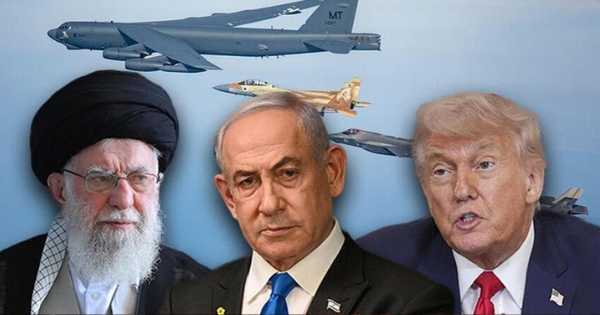
The ongoing conflict in West Asia has put the leaders of Iran, Israel and the United States into a spotlight of global scrutiny. All three leaders, Ali Khamenei, Benjamin Netanyahu, and Donald Trump, have caused untold suffering through their violent actions and policies. They have shown an alarming willingness to use force and violence as tools of statecraft. While it is easy to lump them all together as mere perpetrators of violence, it is essential to remember that their actions, motivations, and the extent of their impact vary significantly. Each one of these men has wielded power in their own way, and each nation’s involvement in the conflict reveals distinct characteristics of leadership and morality.
Ali Khamenei, the former Supreme Leader of Iran, passed away as a man who evoked mixed feelings. On one hand, his courage in facing the bombs that fell on Iran in his final days gave some left-wing intellectuals a reason to celebrate his defiance. To many, Khamenei embodied a symbol of anti-imperialist resistance, especially with his vocal criticism of the West and his leadership in resisting foreign pressures. Yet, looking back at his leadership, the legacy he left behind is one fraught with contradictions. While Khamenei showed bravery in the face of external threats, it would be wrong to reduce his leadership to just one of resistance. His reign was marked by an unwillingness to embrace the democratic aspirations of the Iranian people. Throughout his tenure, Iran remained under the grip of a rigid clerical state, which became notorious for its harsh repression of opposition voices and its violent crackdowns on dissent.
During his time in power, Khamenei could have chosen a different path. He could have ushered in an era of greater political freedoms, and in doing so, advanced gender equality, reduced social oppression, and fostered a more dynamic society. Iran, unlike many of its neighbors, has a highly educated population, rich cultural history, and vast natural resources. With its history of scientific advancement and a rich tradition in arts and philosophy, Iran could have flourished under a system that embraced democracy. Yet Khamenei and his leadership chose a path that veered toward suppression rather than progress. The Iranian regime under his rule backed extremist factions and exacerbated tensions in the Middle East by meddling in regional conflicts such as those in Syria, Lebanon, and Yemen. Rather than cultivating diplomacy, Khamenei’s government became known for its ideological stance, its hatred for Israel, and its support of violent groups like Hezbollah, furthering instability in the region.
This brings us to the second leader, Benjamin Netanyahu, the longtime Prime Minister of Israel. Netanyahu is, without a doubt, a man driven by ideology. His deep Zionism stems from his roots, shaped by his father’s right-wing political views and his brother’s tragic death in the 1976 Entebbe raid. From the outset of his tenure, Netanyahu consistently pursued policies that stymied any meaningful progress toward peace with the Palestinians. His relentless expansion of illegal settlements in the West Bank served to undermine the viability of a two-state solution and perpetuated the suffering of Palestinians. Netanyahu’s political career has been defined by a hardline approach, marked by his refusal to acknowledge the legitimate aspirations of the Palestinian people.
Netanyahu’s record is filled with actions that are difficult to reconcile with any notion of justice or morality. His response to the 2023 Hamas terror attack was brutal and vindictive. Under his leadership, Israel launched devastating military operations that targeted Gaza, resulting in the death of tens of thousands of civilians and rendering over a million people homeless. In the aftermath, Netanyahu faced international condemnation, and the International Criminal Court even labeled him a war criminal. The sheer scale of the destruction caused under his leadership reveals the terrifying extent to which Israel’s military machine was unleashed on innocent civilians.
Yet Netanyahu’s motivations extend beyond the region. His domestic political struggles, including charges of corruption, have led many to speculate that his pursuit of war and violence is also a way to maintain his power. His personal wealth and luxurious lifestyle, funded by gifts from wealthy businessmen, seem to underscore his disregard for the welfare of others. The unending conflict, whether with Hamas, Iran, or any other adversary, appears to be a way for Netanyahu to remain in power, divert attention from his scandals, and consolidate his position at the top of Israel’s political hierarchy. To achieve these ends, he has relied on the support of successive U.S. presidents, who have turned a blind eye to his actions and allowed him to pursue policies that exacerbate the humanitarian crisis in Gaza.
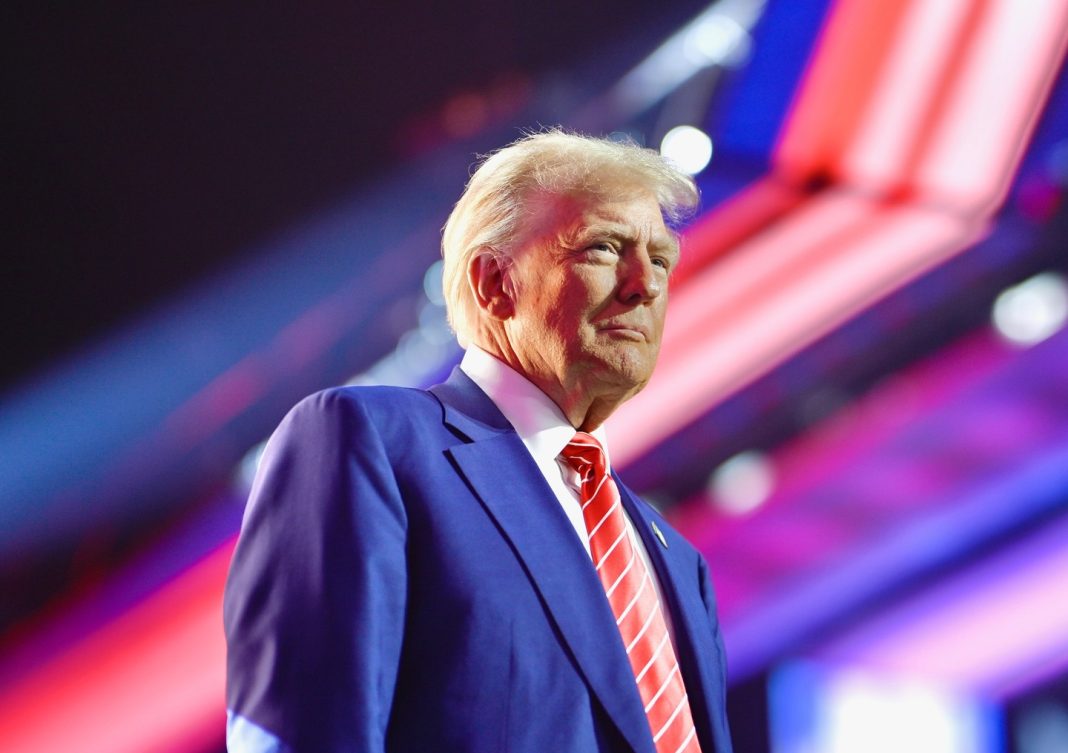
The third key player in this conflict is Donald Trump, the former president of the United States. Unlike Khamenei and Netanyahu, Trump’s motivations appear far less ideological. He lacks a coherent guiding principle or philosophy that could explain his approach to the Middle East. A man driven by power, vanity, and greed, Trump’s foreign policy decisions often seem to be guided by personal interests rather than any grand vision of American supremacy or the promotion of democracy abroad. In his time as president, Trump made some strange and often contradictory foreign policy choices, from attacking Venezuela to launching airstrikes in Somalia and Nigeria. His decision to escalate tensions with Iran was no different.
Trump’s handling of the Iranian conflict was marked by unpredictability and inconsistency. His administration repeatedly claimed that the U.S. was acting in the interest of peace, yet his military interventions in Iran were more aggressive than ever before. Trump’s bombings of Iran seemed to lack any rational, justifiable purpose. His stated reasons for military action were often contradictory. At one point, Trump seemed to be motivated by a desire to outdo Obama’s legacy by taking out Osama bin Laden’s successor. Other explanations focused on his supposed desire to profit from the reconstruction of Gaza or control Iran’s vast oil reserves. And still, others speculate that his actions were driven by a need to distract from his own personal scandals or ensure his political survival.
Whatever the true motivation behind Trump’s actions, the result was catastrophic. Tens of thousands of innocent people in Iran have suffered as a result of the U.S. military’s aerial bombardment. Families have been torn apart, homes destroyed, and millions displaced. These actions have led to widespread suffering, and their impact has reverberated far beyond the borders of Iran, with consequences that will be felt for years to come.
While Khamenei, Netanyahu, and Trump each wielded power in their own distinct ways, all three have left behind a legacy of violence and suffering. Their actions have had a far-reaching impact on the lives of millions of innocent people. The devastating conflicts they have contributed to in the Middle East have led to untold human suffering, with civilians paying the price for decisions made in the corridors of power.
While it is easy to draw comparisons between these three leaders, it is crucial to recognize that their actions and their motivations differ significantly. Khamenei’s actions were deeply rooted in his ideology of Islamic theocracy and his commitment to Iran’s role as a regional power. Netanyahu, on the other hand, is driven by a vision of a Greater Israel, one that disregards Palestinian rights and the possibility of a peaceful resolution to the Israeli-Palestinian conflict. Trump’s decisions, on the other hand, seemed to be motivated primarily by personal vanity, political expediency, and the pursuit of wealth.
While all three men are responsible for inciting violence and contributing to the suffering of countless innocent people, the sheer scale of the destruction they have wrought is not equal. Iran’s military capabilities, though formidable, are nothing compared to the firepower of the United States or Israel. Trump and Netanyahu command the most powerful militaries in the world, and they have used their weapons of war to wreak havoc on countries like Iran and Lebanon. Their willingness to use such force, without regard for the lives of civilians, places them in a league of their own when it comes to responsibility for the human cost of these conflicts.
The suffering that has been inflicted upon innocent people in Iran, Israel, and Palestine cannot be overstated. Thousands have lost their lives, millions have been displaced, and countless more have been left traumatized by the violence unleashed by these leaders. But even in the midst of all this destruction, it is important to recognize that not all evil is the same. Some leaders have been driven by ideology, others by personal ambition, and others still by a dangerous combination of both. The impact of their actions will continue to be felt for generations, but it is crucial that we remember the distinct ways in which each of these leaders has shaped the course of history.