
By Satyabrat Borah
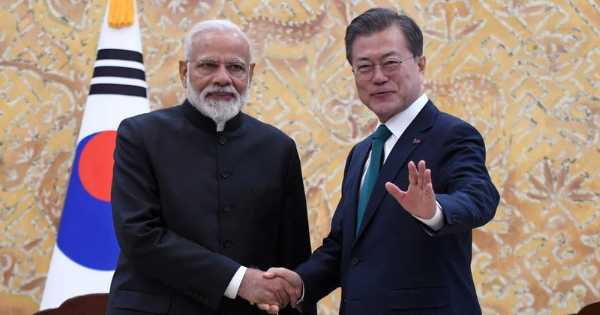
The world today feels like a ship navigating through a heavy fog where the waves of change are both constant and unpredictable. In this shifting landscape, the partnership between India and South Korea has emerged as a steady anchor for both nations. Looking at the map, these two countries might seem far apart, separated by vast stretches of sea and land, but their current connection is deeper than simple geography. They find themselves at a unique crossroads in 2026, where shared democratic values and a mutual desire for stability are drawing them closer than ever before. This bond is no longer just about selling cars or electronics; it is about two major Asian powers realizing they are much stronger when they face the world together.
For years, the story of India and South Korea was primarily a business ledger. We saw Samsung phones in every hand and Hyundai cars on every street corner. While that economic success provided a solid foundation, the relationship often felt a bit one-sided. India frequently spoke about a growing trade deficit, feeling that while it welcomed Korean goods with open arms, its own products and services were meeting invisible walls. This created a sense of imbalance that needed a human touch to fix. Leaders in both New Delhi and Seoul have finally recognized that a partnership cannot survive on trade alone if one side feels left behind. They are now working to rewrite the rules of their economic engagement to ensure that growth feels fair and inclusive for everyone involved.
One of the most exciting shifts in recent times is how the two nations are thinking about security. It is a reality that the Indo-Pacific region is becoming a focal point of global tension. Rather than acting as bystanders, India and South Korea are stepping up to coordinate their efforts. They are aligning India’s Act East Policy with South Korea’s Indo-Pacific Strategy, creating a shared vision for a region that is free and open. This is a significant move because it shows a transition from being passive observers to being active architects of their own destiny. They are talking more frequently about maritime safety, keeping trade routes open, and ensuring that no single power can dictate the rules of the ocean.
Technology is another area where the two are finding a common language. We often think of South Korea as a hardware giant and India as a software powerhouse. In the past, these were parallel tracks that rarely met. Today, they are merging. The launch of the India-Korea Digital Bridge is a perfect example of this new energy. It represents a real effort to combine Korean manufacturing precision with Indian digital ingenuity. They are looking at things like semiconductors, where India wants to build its own chips and South Korea has the world-class expertise to help make that happen. This collaboration is born out of a realization that relying on a single source for critical technology is a risk neither can afford to take.
This cooperation extends to the very stars above us. The partnership between the Indian Space Research Organisation and the newly formed Korea Aerospace Administration is a testament to how high their ambitions have grown. By sharing knowledge and resources in space exploration, they are proving that the sky is not a limit but a new frontier for their friendship. Whether it is monitoring the climate from above or developing new satellite technologies, this work is about solving modern problems using the best minds from both cultures. It is a reminder that when two nations decide to trust each other, they can reach heights that seemed impossible just a decade ago.
In the defense sector, the relationship is moving from a buyer-seller dynamic to one of genuine partnership. The success of the K9 Vajra howitzers, built in India through a collaboration with South Korean firms, showed everyone what was possible. Now, they are looking to replicate that success in other areas like shipbuilding and advanced defense systems. India’s push for self-reliance in defense fits perfectly with South Korea’s desire to find reliable partners for joint production. This isn’t just about making weapons; it is about building a secure supply chain that can withstand global shocks. It is about knowing that your partner has your back when the world becomes uncertain.
While the big deals and high-level summits get the headlines, the heartbeat of the relationship remains the people. For a long time, there was a gap in how well the two societies actually knew each other. South Korean culture, through music and films, has seen a massive surge in popularity across India. At the same time, more Indian professionals are finding homes in Seoul and Busan. There is still work to do in making these two cultures truly understand each other on a human level. Addressing concerns about social integration and making it easier for students and professionals to move between the two countries is essential. A partnership built only on steel and silicon is brittle; one built on friendships and shared experiences is resilient.
The road ahead is not without its bumps. There are still bureaucratic hurdles to clear and trade imbalances to iron out. Negotiating an upgrade to their trade agreement is a slow process that requires patience and a willingness to see things from the other person’s perspective. India wants better market access for its medicines and agricultural products, while South Korea seeks a more predictable regulatory environment in India. These are the kinds of honest conversations that friends must have. The fact that they are having these discussions openly is a sign of a maturing relationship. They are no longer avoiding the tough topics; they are leaning into them.
As we look at the geopolitical storms gathering on the horizon, the coordination between New Delhi and Seoul offers a glimmer of hope. They are showing that middle powers can play a decisive role in maintaining global peace. By choosing to collaborate on everything from green energy to artificial intelligence, they are setting an example of how modern nations should interact. They are moving away from the old ways of thinking where one side wins and the other loses. They are building a future where both can thrive together. This is a journey of two nations that have found in each other a reliable companion for the long walk ahead.
The bond between India and South Korea is becoming a story of shared resilience. It is about two vibrant democracies that refuse to be defined by the pressures of others. They are choosing to chart their own course, driven by the needs of their people and a shared vision of a stable world. As they continue to bridge the distance between them, they are proving that distance is just a number when there is a common purpose. The Special Strategic Partnership is finally starting to live up to its name, transforming from a formal title into a living, breathing reality that impacts the lives of millions in both countries.