
ROOPAK GOSWAMI
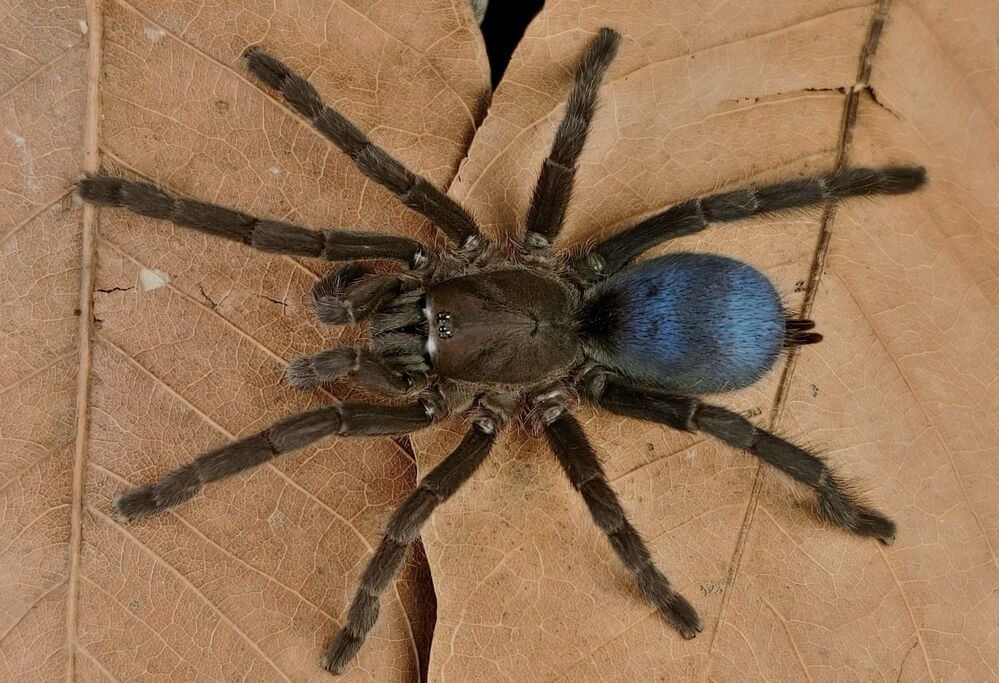
Guwahati, June 22: A striking metallic-blue tarantula lurking in the forests of Meghalaya’s Khasi and Garo Hills has been identified as a species new to science, highlighting once again why the state is regarded as one of India’s richest biodiversity hotspots.
Named Selenocosmia meghalayensis after the state where it was discovered, the spider is currently known only from Meghalaya and may exist nowhere else on the Earth.
The discovery has been detailed in the latest issue of the international taxonomic journal Faunitaxys.
The species was discovered during field surveys in East Khasi and South Garo Hills by a team of arachnologists led by Rajesh Sanap of the Thackeray Wildlife Foundation, Mumbai, along with Gautam Kadam of the Division of Arachnology, Sacred Heart College, Kochi, Tejas Thackeray Founder of the Thackeray Wildlife Foundation, Mumbai, Madhumita Rajkumar (Chennai), and Yogendra Satam (Mumbai).
The spiders inhabit silk-lined burrows dug into mud embankments and forested slopes. Surveys recorded around 20 burrows within a relatively small study area, suggesting that while the species has escaped scientific attention until now, it may be locally abundant in suitable habitats.
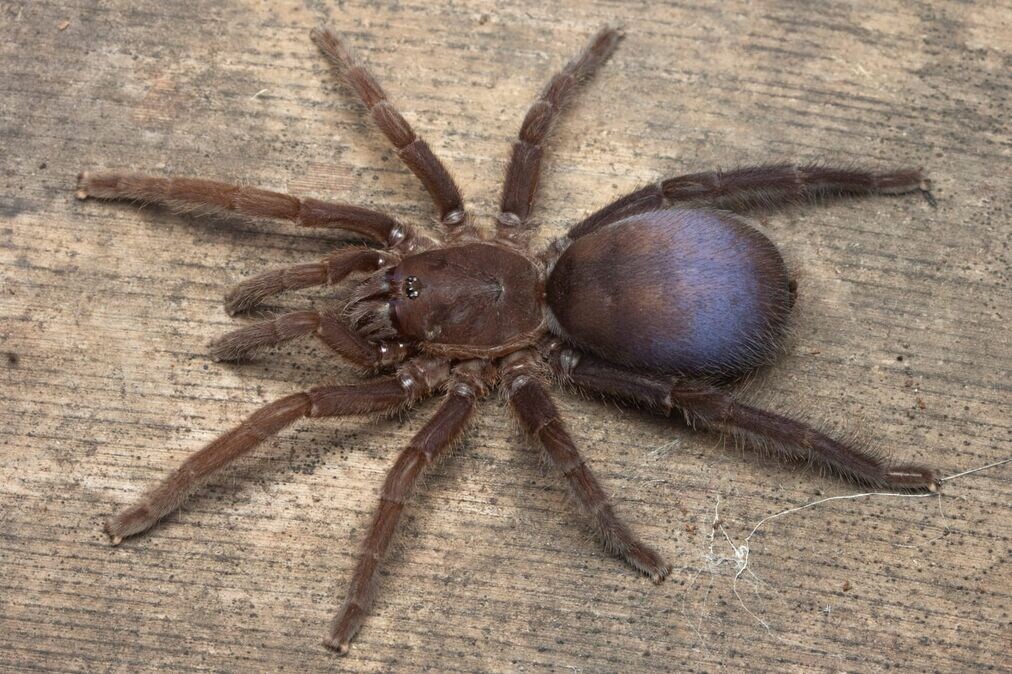
What sets the tarantula apart is its subtle metallic-blue sheen. According to the researchers, the abdomen and legs display iridescent bluish to steel-blue colouration, giving the spider a distinctive appearance among India’s known tarantulas.
An interesting fact: in animals, true blue pigments are exceptionally rare, and the blue shades in butterflies, birds, spiders, and many other organisms are produced by specialized scales, feathers, hairs, or structures on the skin rather than chemical pigments. Blue is what we call a structural color in animals.
The discovery is significant because it expands scientific understanding of the genus Selenocosmia, a group of burrowing tarantulas distributed across South and Southeast Asia. With the description of Selenocosmia meghalayensis, India now has three recognised species of the genus, with the Meghalaya tarantula being the sole species recorded from the karst and limestone landscapes of Northeast India.
The study also highlights how much remains unknown about the Northeast’s wildlife. Meghalaya’s forests, caves, and limestone ecosystems have yielded numerous discoveries in recent years, from rare orchids and cave-dwelling organisms to insects, reptiles and spiders previously unknown to science.
But why should we conserve tarantulas? According to Rajesh Sanap, tarantulas are predators in terrestrial ecosystems, helping regulate populations of insects and other arthropods while serving as prey for birds, mammals, reptiles, and parasitoid wasps. They contribute to ecosystem functioning through nutrient cycling and, in some species, soil modification via burrowing. However, many tarantula populations face increasing threats from recent habitat loss and fragmentation, urbanization, climate change, wildfires, and unsustainable collection for the international pet trade. Because of their slow growth, late maturity, and low dispersal ability, tarantulas are particularly vulnerable to population declines and local extinctions.
And this newly discovered tarantula is no exception to these future threats. Although it currently inhabits relatively undisturbed evergreen forests, increasing mining activities, plantation expansion and shifting cultivation in parts of the Khasi and Garo Hills could affect its habitat in the years ahead.
Gautam Kadam stresses that additional surveys and genetic studies are needed to better understand the spider’s distribution, ecology, and conservation status. For now, the discovery serves as another reminder that Meghalaya remains one of India’s richest yet least-explored biodiversity frontiers.
As scientists continue to explore the state’s forests and limestone hills, more species may still be waiting to emerge from the shadows, just as Selenocosmia meghalayensis has done.