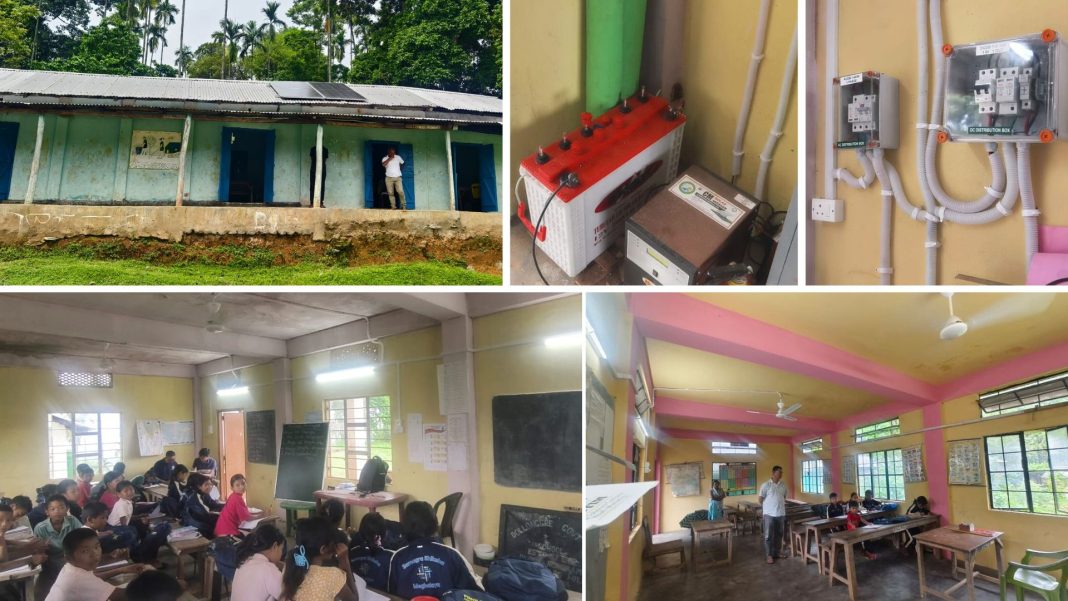

Tura, June 24: Energy dependence in schools in remote parts of Garo Hills has gradually shifted from conventional electricity to solar power, helping the schools cope up with the challenge of power shutdown or lack of electricity connection.
Dozens of classrooms in West Garo Hills are being powered by the sun instead of depending solely on conventional electricity sources.
During a recent inspection, it was found that all 46 Government Lower Primary Schools covered under the Chief Minister’s Solar Mission in Rongram Block are successfully operating on solar power.
The verification report, prepared by a committee constituted by the West Garo Hills district administration, found that all solar installations and associated equipment were functioning properly and were being maintained in good condition.
“Reliable electricity is not just about switching on a light bulb. It means creating a better learning environment for students, a more conducive atmosphere for teaching and access to basic facilities that were previously unavailable in many of these remote institutions,” officials said.
Under the initiative, all 46 schools were equipped with solar power systems tailored to their requirements. While 34 schools received 1.1 KW solar systems, the remaining 12 were provided with larger 2.2 KW units capable of powering multiple classrooms, fans and other electrical equipment.
The Chief Minister’s Solar Mission was launched to address infrastructure gaps in rural areas while promoting sustainable development through clean energy solutions.
The initiative aims to reduce dependence on conventional power sources and ensure reliable electricity supply to public institutions.
The inspection team visited schools across Rongram Block over a nine-day period to assess the functionality of the systems and evaluate their impact on day-to-day school activities. The findings were overwhelmingly positive.
Apart from generating clean energy, the project is expected to reduce long-term electricity costs and introduce students to the benefits of renewable energy at an early age.
Officials also pointed out that all installations are covered under a five-year maintenance and service support programme, ensuring schools can access technical assistance whenever required.
As Meghalaya steadily expands its use of green energy solutions, the success of the Rongram project demonstrates how renewable energy can directly strengthen public services in rural communities.
For the hundreds of children studying in these schools, the solar panels atop their classrooms represent more than just an infrastructure upgrade.
They are helping create brighter classrooms, better learning conditions and a more sustainable future.