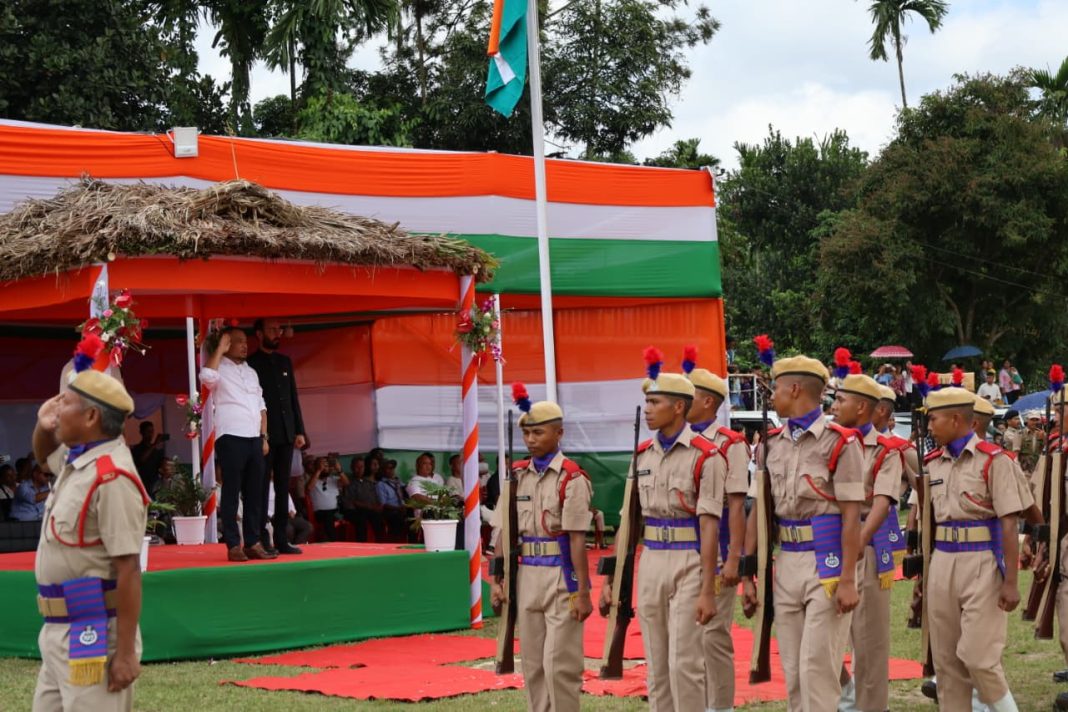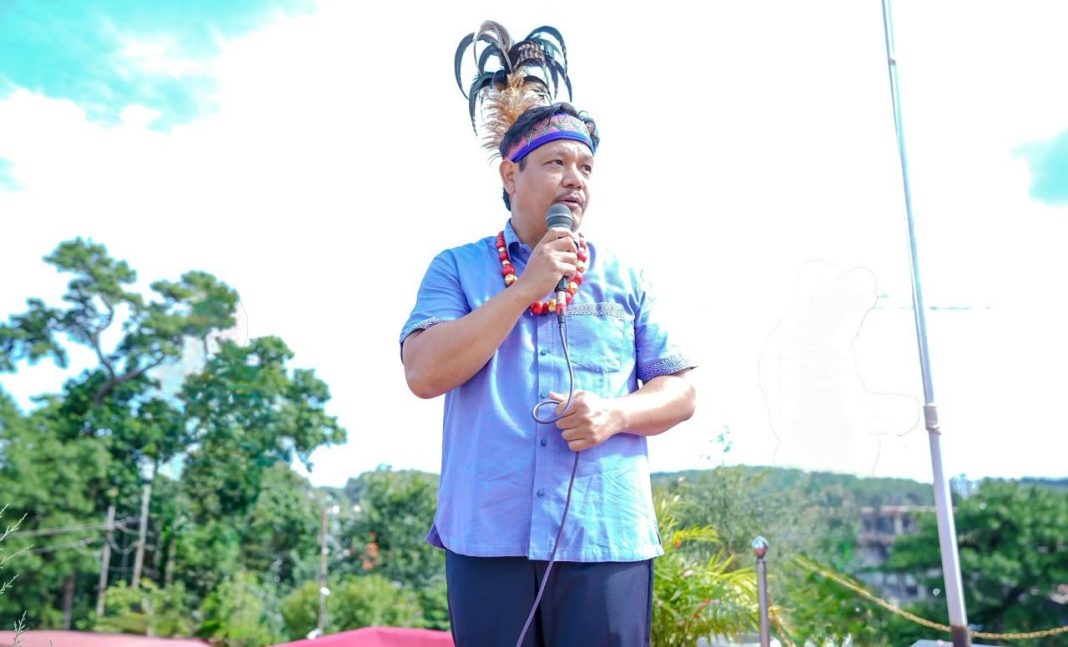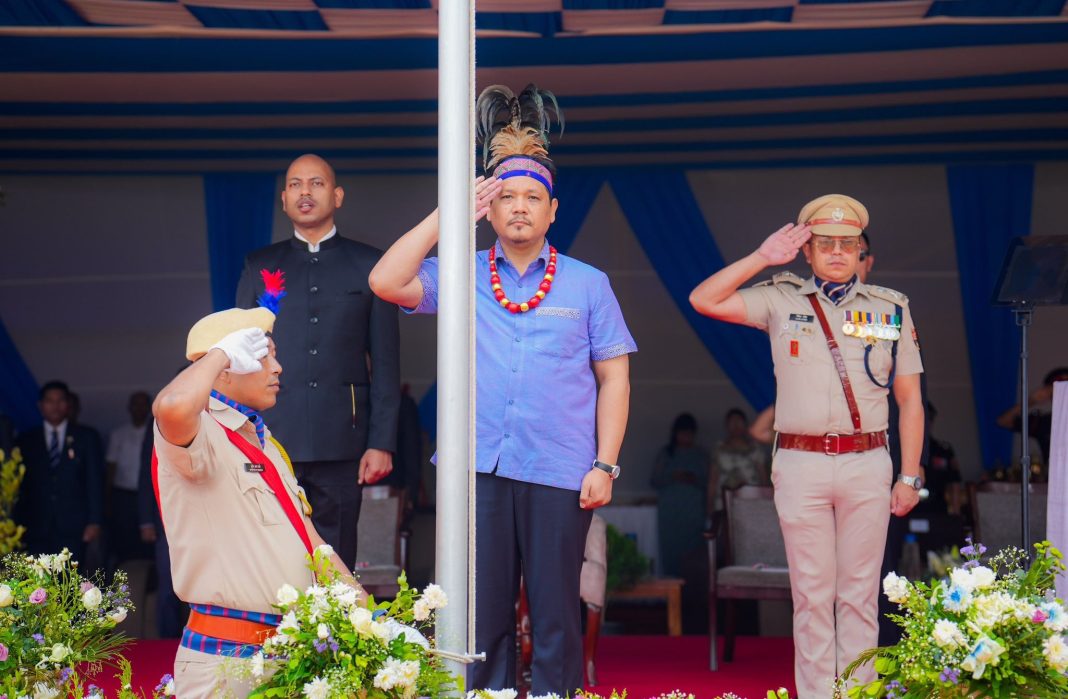

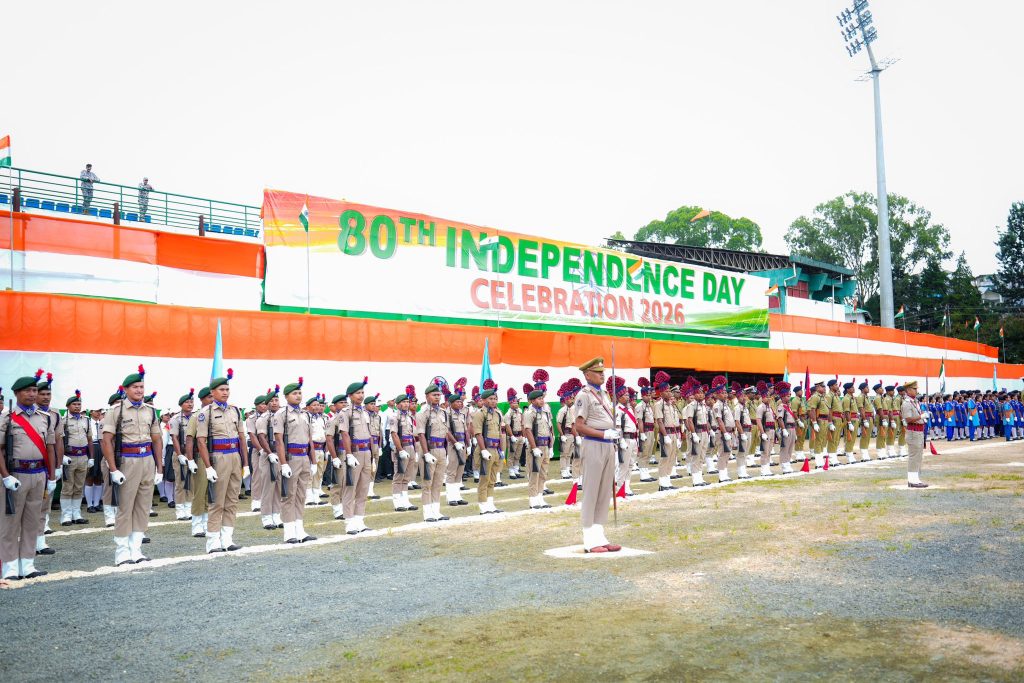
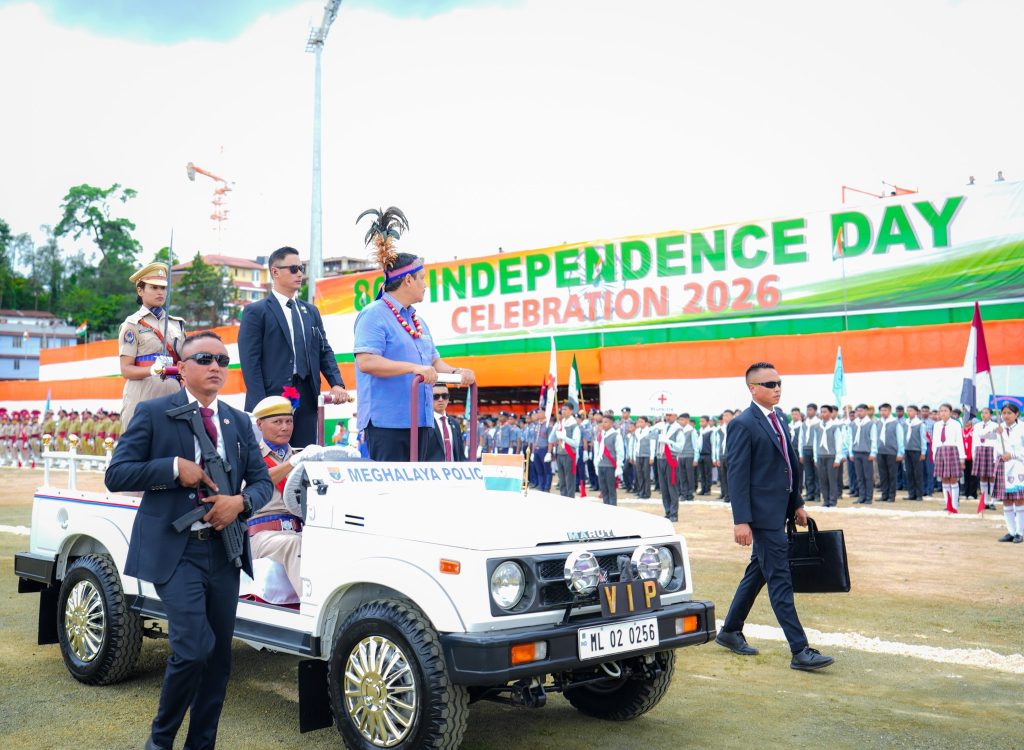
Shillong, Aug 16: Meghalaya Chief Minister Conrad K Sangma on Saturday used his ninth consecutive Independence Day address to present an eight-year report card of his government.
Sangma said the government’s approach was built around three priorities – protecting Meghalaya’s land, empowering its people and preserving its culture. Using the state’s living root bridges as a metaphor, he described it as a philosophy of “perseverance, persistence and possibility”.
The broader development picture has also shown improvement in national assessments. NITI Aayog’s SDG India Index 2023-24 placed Meghalaya in the “Performer” category, with its composite score rising from 60 in 2020-21 to 63. In the same report, the state was listed as a “Front Runner” on goals including gender equality, clean water and sanitation, and peace, justice and strong institutions.
5.47 lakh rural households now have tap water
One of the sharper changes cited by Sangma was in rural drinking water access. In 2019, only 4,550 rural households had tap-water connections; the figure has now risen to 5.47 lakh, he said.
More than 60,000 springs have been mapped for protection and over 500 large water-harvesting structures are being created. Meghalaya, which has 76% forest cover, has also brought 63,000 hectares of natural forest under conservation through GREEN Meghalaya Plus. Nearly 6,300 farmers receive more than Rs 10,000 per hectare annually for protecting forests.
From farm subsidies to markets
Agriculture featured prominently in the government’s push towards high-value production and better market access. CM FARM+ covers more than 25,000 farmers across all 12 districts, while the Lakadong, Organic, Floriculture and Ginger missions target higher incomes.
More than 4,500 broom-grass farmers received support during market distress last year, while the government is paying the farmer share of insurance premiums for over 72,000 farmers under the Pradhan Mantri Fasal Bima Yojana.
Forty PRIME hubs are being set up to bring farmers closer to markets. An organic spice-processing unit at Bhoirymbong, Ri-Bhoi, is expected to process 10,000 metric tonnes of ginger annually, benefiting 5,500 farmers across 112 villagesand potentially raising each farmer’s annual income by about Rs 40,000, according to Sangma.
3,200 km of roads bridging connectivity gap
Sangma said more than 3,200 km of roads had been constructed over eight years, including the Nongstoin-Maweit-Nongjri, Dkhiah-Sutnga-Saipung-Pala-Semmasi, Weiloi-Mawsynram-Phlangwanbroi, Songsak-Mendipathar and Chokpot-Karukol roads.
The scale of the remaining challenge is visible in central data. National Rural Infrastructure Development Agency figures show 2,392 of 4,793 identified habitations in Meghalaya had been connected under the rural roads programme, indicating that road-building has not eliminated the state’s access deficit.
Health gains show up in maternal and infant mortality
Maternal deaths have fallen by more than 56% since 2020, while infant deaths have declined by nearly 40%. Meghalaya has maintained 90% full immunisation coverage for three consecutive years.
The Chief Minister’s Safe Motherhood Scheme has established transit homes near health centres, while its vehicles have transported one lakh pregnant women, including more than 15,800 high-risk mothers, to care.
The Early Childhood Development Mission and Mission 1000 Days cover nearly four lakh children, more than 50,000 pregnant and lactating women and over 54,000 adolescent girls, including families in 1,278 villages that previously lacked such support.
Better exam results, harder jobs question
Meghalaya’s education numbers point to a sharp improvement in school outcomes. Its Performance Grading Index score rose from 448 to 525 in one year, moving the state out of the lowest category. The SSLC pass rate climbed from 57% in 2018 to 97.2%, while HSSLC rose from 75% to 86.6%.
The government is trying to translate this into livelihoods: more than 55,000 young people have been trained under the CM Skills Mission since 2022, with some earning up to Rs 1 lakh a month in food processing, handicrafts and services.
The youth strategy also extends to entrepreneurship. PRIME supports more than 6,000 entrepreneurs, while CM-ELEVATE has reached over 3,000 beneficiaries. Together, the schemes have generated around 10,000 direct and 25,000 indirect jobs, Sangma said.
He cited Ri-Bhoi entrepreneur Wallambok Pyngrope, whose Eri yarn unit SaiLum provides a local market for cocoon-producing farmers and is linked to livelihoods for more than 9,500 people.
Tourism, music and sports become economic bets
Annual tourist arrivals have risen from around 12 lakh in 2018 to nearly 18 lakh, according to Sangma. The government is developing Umiam, Sohra, Mawkyrwat, Thadlaskein, Dawki, Nokrek, Siju and New Shillong, alongside a homestay scheme offering up to Rs 7 lakh in support.
The Meghalaya Grassroots Music Programme has supported more than 8,850 artists through over 18,000 performances, including platforms in Delhi, Mumbai, Japan and Singapore.
Sports is being treated as both a talent pipeline and livelihood opportunity. The government has completed or taken up 240 grassroots sports projects, while the STAR Programme has assessed 24,500 young athletes, with 12 on the Super Elite pathway.
A 2025 policy allowing direct government appointments for outstanding sportspersons has already benefited Pynshngain Kurbah of Ri-Bhoi, a bronze medallist in canoeing at the 38th National Games. Under the DREAM Mission, rehabilitation centres have increased from nine in 2018 to 14.
Governance, power and the road ahead
Since 2024, CM Connect has reached over one lakh citizens through its helpline, WhatsApp, petitions, centres and block-level interactions. Sangma cited a worker stranded in Srinagar whose complaint helped recover Rs 1.7 lakh in unpaid wages.
Sangma said Meghalaya had gone three consecutive years without scheduled load-shedding, while transmission losses fell from 30% to 13.2%. The March 2022 Assam-Meghalaya agreement resolved differences in six of 12 boundary areas, while a new pay framework from April 2026 covers more than 23,000 teachers.
Looking ahead, the government is betting on New Shillong, the proposed Shillong-Silchar High-Speed Corridor, airport expansion and the Dhubri-Phulbari bridge, expected to cut the journey between the two towns from 212 km to about 20 km.
Sangma said Meghalaya’s economy had more than doubled since 2018 and described it as the third-fastest-growing state in India over the past five years, linking the trajectory to Vision 2032.
The immediate national spotlight will be the 39th National Games, with more than 10,000 athletes expected to compete in nearly 39 disciplines as Meghalaya turns 55.
Sangma nevertheless acknowledged that the development story remains unfinished, with villages still waiting for connectivity, young people seeking opportunities and families looking for better incomes. His closing formulation was that the government would continue to put “people first, farmers first, mothers first, youth first” as Meghalaya enters its next phase.