
By Satyabrat Borah
The twenty fifth of April carries a weight that many of us in comfortable, temperate climates might never fully grasp. It is World Malaria Day, a date etched into the global calendar not merely as a formality or a moment of dry reflection, but as a collective breath held by millions of people across continents. When we talk about malaria, we are talking about a disease that has shaped human history, dictated the rise and fall of empires, and continues to influence the economic and social fabric of entire nations. This day serves as a powerful reminder that while we have made incredible strides in medicine and technology, a tiny insect still holds the power to stall the progress of humanity.
To understand why this day matters, we have to look at the faces behind the statistics. It is easy to get lost in the millions of cases reported every year, but each number represents a child missing school, a mother unable to work, or a family mourning a loss that was entirely preventable. Malaria is a thief of time and potential. It thrives in places where resources are thin, turning a simple fever into a life altering crisis. World Malaria Day is about bringing those stories to the forefront and ensuring that the fight against this parasite remains a global priority rather than a localized struggle.
The history of our battle with malaria is a long and winding road. For centuries, humans didn’t even know what caused the shaking chills and burning fevers. People blamed bad air or swamp vapors. It wasn’t until the late nineteenth century that scientists identified the Plasmodium parasite and the Anopheles mosquito as the culprits. This discovery changed everything, turning a mysterious curse into a biological puzzle that could be solved. Since then, the world has seen waves of optimism and periods of stagnation. We have seen the successful eradication of malaria in many parts of Europe and North America, which proves that victory is possible with the right tools and sustained will.
The significance of this day lies in the bridge it builds between those who have won the fight and those who are still in the thick of it. It is a call for equity. Most malaria deaths today occur in sub Saharan Africa, particularly among children under five years old. This geographical concentration creates a cycle of poverty that is incredibly difficult to break. When a significant portion of the workforce is consistently sick, productivity drops. When healthcare systems are overwhelmed by preventable malaria cases, they have fewer resources to tackle other emerging threats. World Malaria Day highlights the fact that global health is only as strong as its weakest link.
Innovation is a major theme of this observance. Every year, researchers and health organizations use this platform to showcase new breakthroughs. We are currently living in an era of remarkable scientific advancement. The rollout of the first malaria vaccines represents a historic milestone that many thought would never come. These vaccines, along with next generation bed nets and more effective antimalarial treatments, provide a glimmer of hope. Still, the parasite is a cunning adversary. It constantly evolves to resist the drugs we throw at it, and mosquitoes develop ways to bypass our insecticides.
This constant biological arms race means that we can never afford to be complacent. World Malaria Day is the annual alarm clock that tells us to keep pushing, keep funding, and keep dreaming of a world where no one dies from a mosquito bite.
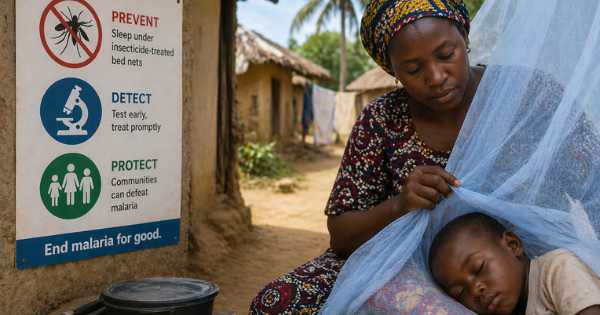
Education plays a massive role in the success of this mission. Much of the work happens on the ground, in villages and towns where community health workers travel door to door. They teach families how to properly hang a net, how to recognize the early signs of infection, and why it is vital to finish a full course of medication. These grassroots efforts are the heartbeat of the movement. On World Malaria Day, we celebrate these unsung heroes who work in difficult conditions to save lives. Their dedication is a testament to the human spirit and our innate desire to protect one another.
The economic argument for ending malaria is just as compelling as the moral one. Investing in malaria control is one of the most cost effective ways to improve global prosperity. For every dollar spent on prevention and treatment, there is a massive return in the form of improved health outcomes and increased economic activity. Children who grow up without the constant threat of malaria are more likely to stay in school and eventually contribute to their local economies. By clearing this hurdle, we unlock the potential of millions of people, allowing communities to flourish in ways that were previously impossible.
Climate change adds a new layer of urgency to the discussion. As global temperatures rise and weather patterns shift, the habitats of mosquitoes are expanding. Regions that were once too cold for malaria are now seeing the return of the disease. This reality reminds us that malaria is not just someone else’s problem. It is a global issue that requires a global solution. The borders we draw on maps mean nothing to a mosquito. If we allow the disease to thrive in one corner of the world, we leave the door open for it to return to others.
Reflecting on World Malaria Day also forces us to confront the political will required to sustain this fight. Funding for malaria programs often fluctuates based on the political climate of donor nations. This inconsistency is dangerous. To truly eliminate the disease, we need long term commitments that span decades. We need leaders who understand that health is the foundation of all other progress. This day is an opportunity for citizens to hold their governments accountable and demand that international health remains a top priority.
There is a certain beauty in the way the world comes together for this cause. From high level summits in Geneva to local football matches in rural villages, the message is the same: we have the tools, we have the knowledge, and we have the duty to end malaria. The red and white ribbons, the social media campaigns, and the lighting of monuments all serve to create a sense of shared destiny. It is a rare moment where the global community aligns its focus on a single, achievable goal.
The journey toward a malaria free world is not just about biology and logistics. It is about dignity. It is about the right of every person, regardless of where they are born, to live a life free from the fear of a preventable disease. When we celebrate World Malaria Day, we are celebrating our shared humanity. We are acknowledging that the suffering of a family in a remote village matters just as much as the health of those in a bustling metropolis. This empathy is what drives us forward.
The future path is clear but challenging. We must continue to invest in the development of even better vaccines and more resilient health systems. We must ensure that the tools we already have reach the people who need them most. We must listen to the voices of the communities on the front lines and empower them to lead their own defense. The road to zero malaria is long, but every step we take brings us closer to a brighter, healthier reality for everyone.
World Malaria Day is a reminder to what we can achieve when we work together. It reminds us that while the challenges are great, our collective resolve is greater. It is a day of remembrance for those we have lost and a day of fierce determination for those we can still save. The fight against malaria is one of the great moral crusades of our time, and it is a battle we are winning, one net, one dose, and one life at a time.
The significance of this day will only grow until the day comes when we no longer need to mark it, because the disease itself has been consigned to the history books. Until then, we stand together, we speak out, and we continue the work of making the world a safer place for every child, every family, and every nation. This is the true meaning of the day. It is a promise kept to the future generations that they will inherit a world where the buzz of a mosquito is nothing more than a minor nuisance, not a death sentence. We carry this hope forward, fueled by the progress of the past and the possibilities of tomorrow.
The story of malaria is long, but the ending is ours to write. Through cooperation and unwavering focus, we are turning the tide. Every year on this day, we reaffirm that a malaria free world is not just a dream but a destination we are actively reaching for. The energy of this global movement is infectious, proving that when we unite against a common foe, there is no limit to what we can accomplish for the sake of all people everywhere.