
Garo Hills is recognised in the paper as a region rich in biodiversity and ethnobotanical knowledge
ROOPAK GOSWAMI
Shillong, Sept 22: A little-known medicinal herb from the Garo Hills has shown significant antioxidant and preliminary antimicrobial potential, with scientists identifying 18 chemical compounds in its leaves in what they describe as the first regional characterisation of the plant from Meghalaya.
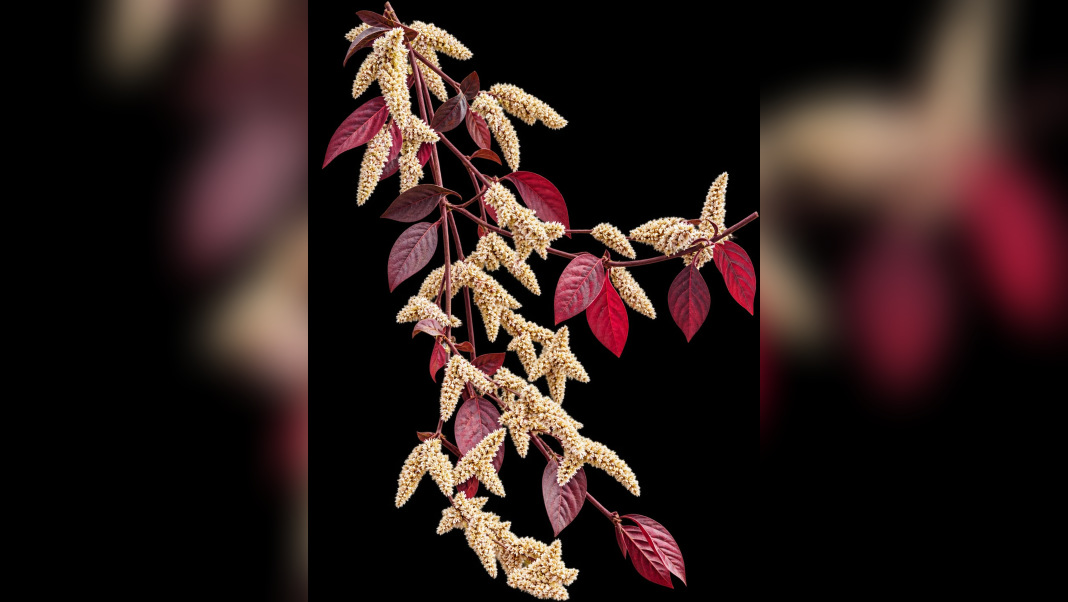
The study, published in the Journal of Applied and Natural Science, examined Aerva sanguinolenta (L.) Blume, a perennial herb of the Amaranthaceae family traditionally used in indigenous healthcare practices.
Researchers Bonchi D. Marak and Amilia Nongbet from the University of Science and Technology Meghalaya (USTM) collected the plant from South Garo Hills and analysed its leaves using gas chromatography-mass spectrometry (GC-MS), Fourier Transform Infrared Spectroscopy (FTIR) and laboratory assays for antioxidant and antimicrobial activity.
The research was carried out by Ms. Bonchi D Marak under the supervision of Amilia Nongbet, HoD Department of Botany University of Science and Technology Meghalaya.
18 compounds detected
GC-MS profiling across methanol, ethanol, hexane and ethyl acetate extracts identified 18 compounds.
Among the prominent compounds were neophytadiene, hentriacontane and N-decanoic acid. Previous studies cited by the researchers have associated these compounds with properties such as anti-inflammatory, antimicrobial, antifungal or antioxidant activity.
However, the researchers stress that the presence of these compounds does not by itself establish therapeutic effects in humans and that individual active molecules need further testing.
Methanol extract richest in phenolics
The study found that the methanol extract recorded the highest total phenolic content, at 209.05 mg GAE/g dry weight.
The highest flavonoid content was recorded in the ethyl acetate extract, at 34.14 RUE/g dry weight.
The researchers found statistically significant differences among the different solvent extracts, indicating that the choice of solvent substantially influenced the amount of phenolics, flavonoids and antioxidant activity recovered from the leaves.
Antioxidant activity close to vitamin C standard
The methanol extract also showed the strongest antioxidant activity among the plant extracts tested, with a DPPH IC50 value of 49.59 µg/mL.
For comparison, the ascorbic acid standard used in the experiment recorded an IC50 of 49.28 µg/mL.
The researchers said the result indicates antioxidant potential in the crude extract, while cautioning that further purification is needed to determine which compounds are responsible for the activity.
Preliminary antimicrobial activity
The extracts were also tested against two bacterial strains—Staphylococcus aureus and coagulase-negative Staphylococcus aureus—and two fungal strains, Candida albicans and Candida tropicalis.
The study recorded varying levels of growth inhibition across the extracts and the antibiotic controls, indicating preliminary antimicrobial activity. The researchers said further work is required to isolate and test specific active molecules.
Linking Garo Hills’ traditional knowledge with modern science
The significance of the study, according to the researchers, extends beyond the chemical profiling of a single plant.
Garo Hills is recognised in the paper as a region rich in biodiversity and ethnobotanical knowledge. The researchers argue that documenting plants used traditionally by local communities can help connect indigenous knowledge with modern pharmacological research and support future bioprospecting and conservation efforts.
The plant specimen collected for the study has also been documented as an herbarium voucher and deposited with the Botanical Survey of India, Shillong, under accession number 102127.
The researchers, however, caution that the findings are regional rather than representative of the species globally. Concentrations of secondary metabolites can vary with season, soil condition, and environmental stress. They also acknowledge that some of the quantitative phytochemical measurements were based on practical duplicates rather than independent biological extractions.
They have called for bioassay-guided fractionation and independent biological replication to establish which specific compounds are responsible for the observed biological activities.