
Safeguarding Federalism and Constitutional Integrity
By Dipak Kurmi
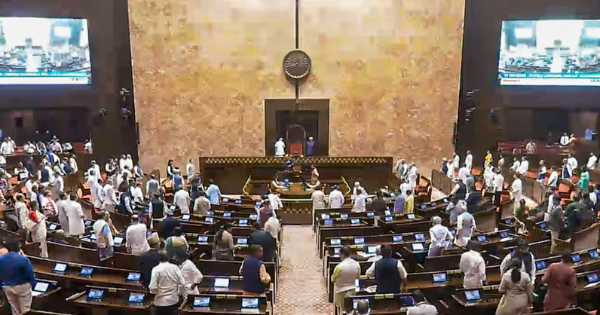
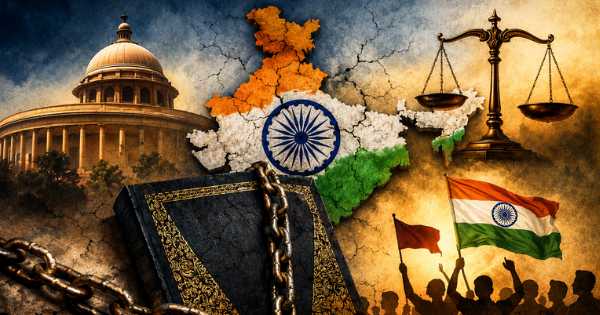
The dramatic collapse of the Constitution (One Hundred and Thirty-First Amendment) Bill, 2026, in the Lok Sabha represents far more than a mere legislative stalemate; it serves as a profound moment of reckoning for the Indian democratic experiment. By failing to secure the mandatory two-thirds majority, with 298 votes in favor and 230 against, the government faced a rare embarrassment that momentarily stalled its relentless political momentum. This defeat is not just a statistical shortfall but a reprieve for the nation, offering a necessary window for a more sober and inclusive conversation regarding the sanctity of the Constitution. For over a decade, the governing style has been characterized by what many observers describe as a permanent revolution—a systematic effort to dismantle countervailing institutions, erode traditional restraints, and consolidate unprecedented executive authority. The introduction of this specific Bill, which duplicitously linked the noble cause of women’s reservation with the highly contentious issues of delimitation and seat expansion, was the latest manifestation of this strategy.
The hallmarks of this permanent revolution were etched into every clause of the defeated legislation. It was an attempt to fundamentally alter the nation’s democratic architecture in a throwaway manner, disregarding the deep implications such changes would have for the Rajya Sabha, the federal structure, and the very character of the Lok Sabha. By tethering women’s quotas to the redrawing of electoral maps, the government sought to weaponize gender for political leverage while simultaneously attempting to restructure the electoral landscape to its own advantage. This strategy of wresting personal ownership and credit for issues where a broad national consensus already exists—such as women’s representation—has been a constant feature of Prime Minister Narendra Modi’s tenure. While this approach has occasionally yielded dividends in welfare reform, it has frequently been undermined by a glaring contradiction: the simultaneous normalization of misogyny within the broader political rhetoric of the ruling party.
Furthermore, the failed Bill highlighted a cynical approach to institutional price discovery, where the boundaries of the constitutional framework are constantly pushed to see how much the executive can get away with before meeting resistance. The sinister nature of this experiment is best evidenced by previous maneuvers in Assam and Bengal, where delimitation and specific identity registries were utilized as templates for institutional gerrymandering. These actions have created a dangerous precedent for manipulating voter demographics and electoral outcomes under the guise of abstract national interest. Much like the trauma of demonetization, these measures often impose the heaviest costs on the most vulnerable citizens, forcing tens of thousands to navigate bureaucratic labyrinths to preserve their status. Until this Friday, the courts and other watchdogs had largely failed to stem this tide, making the Opposition’s unified stand a significant milestone in re-establishing the limits of executive power.
The defeat of the 131st Amendment also brings into sharp focus the growing list of constitutional anomalies that have plagued Indian political discourse for decades. Our system seems to be producing one contradiction after another, particularly in the attempt to generate semi-proportional outcomes through a rigid first-past-the-post mechanism. The deepening reliance on the rotation of reserved constituencies places an immense strain on the rights of voters, often restricting their choices based solely on the identity of the candidate rather than ideological preference. More consistent logical frameworks, such as multi-member districts or party lists, were summarily ignored in favor of a model that allows political parties to find pretexts for avoiding their actual commitments to reservation. The tension is further exacerbated by the inconsistency of accepting caste-based reservations in one sector of the political system while vehemently denying them in another, creating a fractured logic that serves partisan ends rather than genuine social justice.
At the heart of the current crisis lies the delicate balance of federalism and the principle of the equal value of every vote. The integrity of the delimitation process is a sacred pillar of the republic that must be protected from political predation at all costs. While the government attempted to frame the debate as a logistical necessity, the Opposition correctly identified it as a potential threat to regional fairness. However, it is vital that this conversation does not devolve into a reductive and dangerous regional antagonism. The cultural trope of “North versus South” is not only analytically unfounded but risks legitimizing a brand of ugly politics that undermines national unity. Regional fairness in representation and the resistance to linguistic imposition are essential, but they must be argued on principled grounds rather than short-term political gain or regional chauvinism.
The road ahead for the Opposition is fraught with challenges, as the government is known for its ability to turn even incompetence and hubris into a rallying cry for mobilization. We have seen in the past how the ruling party can masterfully play the role of the aggrieved party, casting any form of dissent as mere obstructionism against the nation’s progress. To maintain the momentum gained from this victory, the Opposition must move beyond reactive politics and engage in constant, proactive mobilization. They must convince the citizenry that they stand for genuine institutional integrity and democratic empowerment, rather than just opportunistic resistance. The permanent revolution may have been thwarted for a day, but the underlying threats to the democratic fabric remain pervasive and potent.
Ultimately, this moment offers an opening to rescue the discussion of democracy from the taint of bad faith. A genuine representative process requires a long, hard look at every level of government, from village panchayats to the hallowed halls of Parliament. The rejection of the 131st Amendment Bill should not be seen as a finality, but as the beginning of a more honest deliberation on how to balance gender equity, regional aspirations, and the rights of the individual voter. If India is to remain a vibrant democracy, its constitutional evolution must be guided by consensus and a commitment to the spirit of the law, rather than the whims of an executive seeking to reshape the nation in its own image. Democracy remains in peril, but the events of this Friday prove that the pulse of constitutional resistance is still beating within the heart of the republic.
(the writer can be reached at dipakkurmiglpltd@gmail.com)