
By Satyabrat Borah
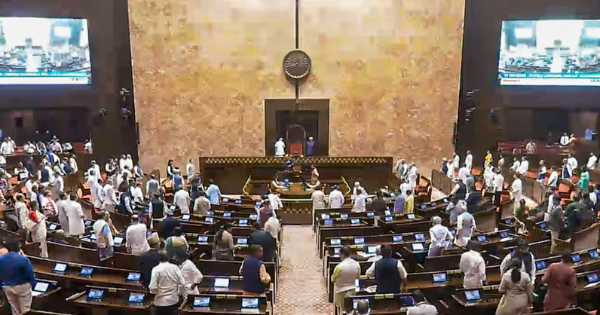
The crushing defeat of the Constitution 131st Amendment Bill in 2026 marks a rare moment where the heavy machinery of a dominant central government hit a wall of its own making. For months, the air had been thick with the scent of an impending political earthquake, one that threatened to redraw the very lines of Indian democracy. But when the dust settled on the floor of the Lok Sabha, the numbers told a story that no amount of verbal maneuvering could mask. The government found itself short of the mandatory two-thirds majority, falling sixty votes shy of the threshold needed to fundamentally alter the representative landscape of the nation. It is a moment of profound significance because it serves as a reminder that our constitutional safeguards are not just ink on old parchment; they are active barriers against the whims of any single political entity that tries to move too fast without taking the whole country along for the ride.
The failure of this Bill was essentially a foregone conclusion for anyone who actually read the fine print instead of just listening to the speeches. The math was simple but the implications were heavy. Out of five hundred and twenty-eight members present and voting, two hundred and ninety-eight supported the move while two hundred and thirty stood firmly against it. To cross the finish line, the government needed three hundred and fifty-two votes.
This gap represents more than just a legislative loss; it represents a fundamental lack of trust in the government’s approach to the sensitive issue of delimitation. When the Bill collapsed, it took the companion Delimitation Bill and the Union Territories Laws Amendment Bill down with it. The government was forced to shelve the entire package, admitting that these pieces of legislation could not exist in isolation. This admission itself reveals the intertwined nature of the trap the government had tried to set.
At the heart of the storm was the controversial plan to expand the Lok Sabha to eight hundred and sixteen members. On the surface, an increase in seats sounds like a logical response to a growing population. But the devil stayed hidden in the details of how those seats would be distributed. The Home Minister attempted to soothe frayed nerves with a verbal guarantee, suggesting that southern states would see their presence increase in the same proportion as their current share. He even went so far as to offer a one-hour adjournment to redraft the Bill with a uniform fifty percent increase for every state as an official amendment. But the opposition was right to ask why this supposedly fair intent was missing from the actual text of the Bill in the first place.
The language presented to the House clearly mandated that delimitation proceed on the basis of the latest Census, which currently means the 2011 data. This path would have inevitably punished states in the south, east, and northeast for their success in population control, shifting the balance of power even more heavily toward the Hindi heartland.
One of the most baffling aspects of this entire episode was the timing. The 2026-27 Census is already under way. Why was there such a frantic rush to push through a massive constitutional change based on old data when new, accurate figures are just around the corner? This haste gave the impression of a government trying to lock in a political advantage before the full reality of modern Indian demographics could be officially recorded.
Adding to the confusion was the decision to link the widely supported issue of women’s reservation to this messy delimitation process. There is a broad, all-party consensus on giving women their due share in legislative bodies. By tying it to a controversial seat-redrawing exercise, the government used a popular cause as a shield for a much more divisive agenda. This smoke-and-mirrors tactic was a transparent attempt to divide the opposition, making a mockery of the parliamentary process and treating a serious constitutional change like a game of tactical chess.
The unity shown by the INDIA bloc during this vote was a significant turning point. Parties that often find themselves at odds on regional issues, such as the Congress, the Samajwadi Party, the Trinamool Congress, the Left, and the DMK, managed to find common ground. They saw through the promises and focused on the text of the law. Their floor coordination was a masterclass in how a focused opposition can act as a check on executive overreach. On the other side of the aisle, the behavior of the Telugu Desam Party and the AIADMK was strikingly naive. Both parties spoke in favor of the Bill, seemingly swayed by verbal assurances while ignoring the fact that their own states stood to lose significant influence.
Under the Bill’s own terms, Andhra Pradesh would have lost five seats and Tamil Nadu would have lost eleven. To trust a spoken promise over a written legislative mandate is a dangerous way to conduct politics, especially when the future of a region’s representation is on the line.
This defeat provides a much-needed moment of reflection for the ruling establishment. The strategy of ramming through structural changes without building a genuine consensus has reached its limit. The path forward is now dictated by the very constitutional rules the government tried to bypass. It must now wait for the 2026-27 Census to reach its conclusion.
Once the data is in, the proper route involves referring the questions of delimitation and Lok Sabha expansion to a parliamentary committee. This is how democracy is supposed to function through deliberation, debate, and the seeking of a broad agreement that spans across geographic and political divides. The two-thirds threshold for constitutional amendments is a deliberate hurdle designed to ensure that no single party can rewrite the rules of the game to suit its own interests. Today, that hurdle did exactly what the founders of the Republic intended it to do.
The narrative of a “ramrod approach” failing is a lesson in the limits of political will. While the government may have the numbers for ordinary legislation, the Constitution demands a higher level of cooperation for things that touch the soul of the federal structure. By trying to rush the process, the government actually delayed the progress of women’s reservation, a goal that everyone claims to want. The lesson here is that transparency is not an optional extra in a democracy; it is the foundation of trust. If the government truly intended for a proportional increase in seats that protected the interests of all states, that should have been the first sentence of the Bill, not a desperate offer made during a floor debate to save a sinking ship.
The focus must return to a fair and data-driven process. The demographic shifts in India are real and they present a complex challenge for representation. Southern states have invested decades in education, healthcare, and family planning, contributing significantly to the nation’s economic progress. To diminish their political voice as a reward for their success would be a historic injustice. Any expansion of the Parliament must balance the need for population-based representation with the need to maintain the federal equilibrium. This balance cannot be achieved through clever wording or verbal guarantees in a heated house. It requires a slow, methodical, and inclusive dialogue that respects the diversity of the Indian union.
The collapse of the 131st Amendment Bill is a victory for the spirit of federalism. It shows that the states are not merely administrative units to be moved around on a map but are the constituent pillars of the nation. The government’s attempt to use “smoke and mirrors” failed because the reality of the numbers was too stark to ignore. Moving forward, the only viable way to implement such far-reaching changes is to abandon the politics of confusion and embrace the politics of consensus. The Constitution is a living document, but it is also a protective one. It protects the minority from the majority and the periphery from the center. Today, those protections stood firm, ensuring that the future of Indian representation will be decided by the people’s actual numbers and their collective will, rather than by a hurried legislative maneuver.
The journey toward a larger Parliament and a more inclusive one that features women in their rightful place continues, but it must now take the long and honest road. The shortcut was blocked, and for the health of Indian democracy, that is exactly what needed to happen. The government should take this chastening experience as an opportunity to reset its relationship with the opposition and the states. By doing so, it can turn a legislative defeat into a democratic victory, building a future where every part of India feels seen, heard, and fairly represented in the halls of power. The era of the ramrod approach has met its end at the gates of the Constitution, and the country is better for it.